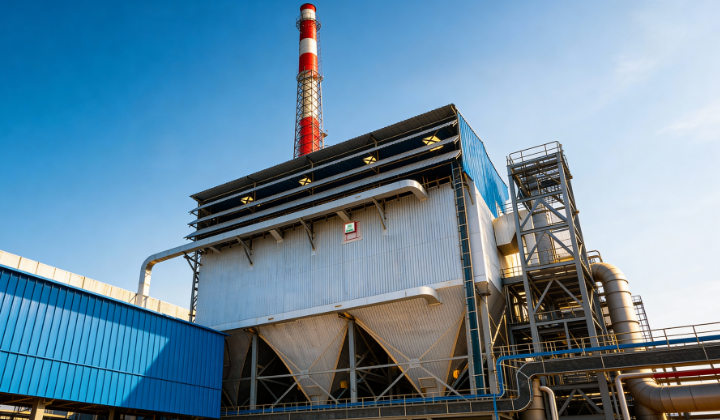
What is the Working Principle of A Dust Collector?
Dust, fumes, smoke and fine particulates are generated in large quantities in the manufacturing and processing of industrial operations. If not managed correctly, these airborne particles can impact worker health, equipment, overall operational productivity, and pollution of the environment. That's when dust collectors are a critical component in industrial air pollution control.
A dust collector is a dust/oral collection system used for the collection, filtration and removal of dust particles from an industrial exhaust gas stream and/or air stream. They're used in cement, power plants, pharmaceuticals, metal processing, wood and paper, food processing, and chemical production.
Enviropol's innovative dust collection systems are tailored to enhance the overall air quality and enable the smooth functioning of Flue Gas Cleaning Systems in industries. The working principle of a dust collector helps industries choose which dust collector system is the optimal dust collector for the coal industry to effectively control the pollution and operate safely.
What is a Dust Collector?
A dust collector is essentially a particle removal system designed to eliminate dust and contaminants from the air within industrial environments. It helps maintain cleaner air inside industrial plants while reducing harmful emissions released into the atmosphere. In many industries, dust collectors are integrated into larger Flue Gas Cleaning Systems to meet environmental regulations and improve workplace safety.
The primary function of a dust collector is to capture airborne dust particles, improve indoor air quality, protect workers and machinery, reduce the risk of fires and explosions, and maintain environmental compliance.
Basic Working Principle of a Dust Collector
The working principle of a dust collector mainly involves drawing contaminated air into the system, separating dust particles, filtering the air, and releasing clean air safely back into the environment.
The process generally begins with the collection of contaminated air, followed by the separation of dust particles, filtration of fine particles, discharge of clean air, and finally dust storage or disposal. The exact operating mechanism depends on the type of dust collector being used.
Air Intake and Dust Capture
The first stage of the dust collection process involves drawing contaminated air into the system through dust collection ducts or collection hoods located near the source where dust is generated. Industrial fans create a vacuum that pulls dusty air into the dust collector.
This stage is extremely important because it helps capture pollutants directly at the source, minimise dust accumulation in the workplace, and improve overall indoor air quality. Efficient air intake systems also improve the performance of the entire Flue Gas Cleaning System.
Dust Separation Process
After entering the collector, the dust separation process begins where larger dust particles are separated from the airflow. Different separation methods may be used depending on the system design, including centrifugal force, gravity settling, filtration media, or electrostatic attraction.
This stage helps reduce the dust load before the air reaches the final filtration stage and improves the efficiency of the overall system.
Filtration Stage
The filtration stage is one of the most important stages in dust collector operation. During this process, fine dust particles are removed using filters, bags, cartridges, or electrostatic systems. The filter media traps the particles while allowing clean air to pass through the system.
Common filtration methods include fabric filters, cartridge filters, HEPA filters, and electrostatic precipitators. This stage is especially important in industries that require advanced Flue Gas Cleaning System performance and strict emission control.
Clean Air Discharge
Once the air has been filtered properly, the clean air discharge stage takes place. The filtered air is either released safely into the atmosphere or recirculated inside the facility.
Proper filtration helps reduce environmental pollution and ensures compliance with industrial emission standards. Modern dust collection systems are designed to provide very high filtration efficiency while maintaining proper airflow throughout the system.
Dust Collection and Disposal
The separated dust particles are collected in hoppers, dust bins, or collection drums. The collected dust is then removed either manually or through automated discharge systems.
Efficient dust disposal systems help reduce maintenance downtime, prevent secondary contamination, and improve operational safety within industrial environments.
Types of Dust Collectors
Different industrial applications require different dust collection technologies.
Cyclone Dust Collectors
Cyclone collectors use centrifugal force to separate dust particles from the airflow. In these systems, air enters the cyclone chamber at high speed, creating a spiral motion that forces heavier particles outward where they settle at the bottom of the chamber.
Cyclone collectors are commonly used in cement plants, woodworking industries, and metal processing industries because of their simple design, low maintenance requirements, and cost-effective operation. They are often used as a pre-cleaning stage in a Flue Gas Cleaning System.
Baghouse Dust Collectors
Baghouse systems use fabric filter bags to capture fine particles. Dust-laden air passes through the filter bags, where particles are trapped on the surface while clean air exits the system.
These systems offer high filtration efficiency and are suitable for fine dust and high-temperature industrial operations. Baghouse systems are widely used in industrial Flue Gas Cleaning Systems because of their reliable performance.
Cartridge Dust Collectors
Cartridge dust collectors use pleated filter cartridges to provide compact and efficient dust filtration. These systems are ideal for industries that generate fine particulate matter and require space-saving designs with easy maintenance and high filtration performance.
Electrostatic Precipitators (ESP)
Electrostatic precipitators use electrical charges to remove particles from gas streams. In this process, particles become electrically charged and are attracted to collection plates.
Electrostatic precipitators are highly effective for ultrafine particles and offer low pressure drop and high operational efficiency. Wet ESP systems are commonly used in advanced Flue Gas Cleaning System operations.
Wet Scrubbers
Electrostatic precipitators use electrical charges to remove particles from gas streams. In this process, particles become electrically charged and are attracted to collection plates.
Electrostatic precipitators are highly effective for ultrafine particles and offer low pressure drop and high operational efficiency. Wet ESP systems are commonly used in advanced Flue Gas Cleaning System operations.
Importance of Dust Collectors in Flue Gas Cleaning Systems
Dust collectors are an essential part of modern Flue Gas Cleaning Systems because they help industries control particulate emissions, improve air quality, comply with environmental regulations, protect worker health, and improve equipment efficiency.
As industrial emission standards become stricter worldwide, the demand for advanced dust collection technologies continues to grow rapidly.
Benefits of Advanced Dust Collection Systems
Modern dust collection systems provide several operational and environmental benefits. They help improve workplace safety by reducing airborne contaminants and protecting workers from exposure to harmful particles.
These systems support environmental compliance by helping industries meet pollution control regulations. Cleaner environments also protect industrial machinery from dust-related damage, improve product quality, and reduce the risk of fires and explosions caused by dust accumulation.
Choosing the Right Dust Collector
Selecting the right dust collector depends on several important factors, including the type of dust generated, particle size, gas temperature, moisture content, and required filtration efficiency.
Enviropol provides customised dust collection solutions designed according to specific industry requirements to ensure the best possible performance of Flue Gas Cleaning Systems.
Future Trends in Dust Collection Technology
Modern dust collection systems are evolving with advancements in technology and sustainability. Future developments include energy-efficient systems, smart monitoring technologies, AI-based maintenance systems, sustainable filtration materials, and advanced emission analytics.
Intelligent Flue Gas Cleaning Systems are becoming increasingly popular as industries focus more on environmental sustainability and operational efficiency.
Role of Enviropol in Industrial Pollution Control
Enviropol provides advanced air pollution control and dust collection solutions for industries by focusing on efficient emission control, high-performance filtration systems, sustainable engineering practices, and reliable industrial support.
The company specialises in designing modern Flue Gas Cleaning Systems that help industries improve environmental compliance while maintaining efficient and safe operations.
Conclusion
In the process of dust removal, the performance of dust collector is very important, which is also directly related to the air quality and emission of the industrial workshop. They function by drawing in polluted air, dusting, filtering out pollutants and discharging clean air safely.
As per the industrial requirement, different technologies like cyclone separators, baghouse filters, electrostatic precipitators and wet scrubbers are applied. With the ever-growing emphasis on sustainability and environmental legality within industries, modern dust collection systems will continue to be an integral component of every contemporary Flue Gas Cleaning System.
As an innovative solution provider and a leader in the industry, Enviropol continues to enable industries to operate in a cleaner and safer environment, using advanced pollution control solutions and technology.