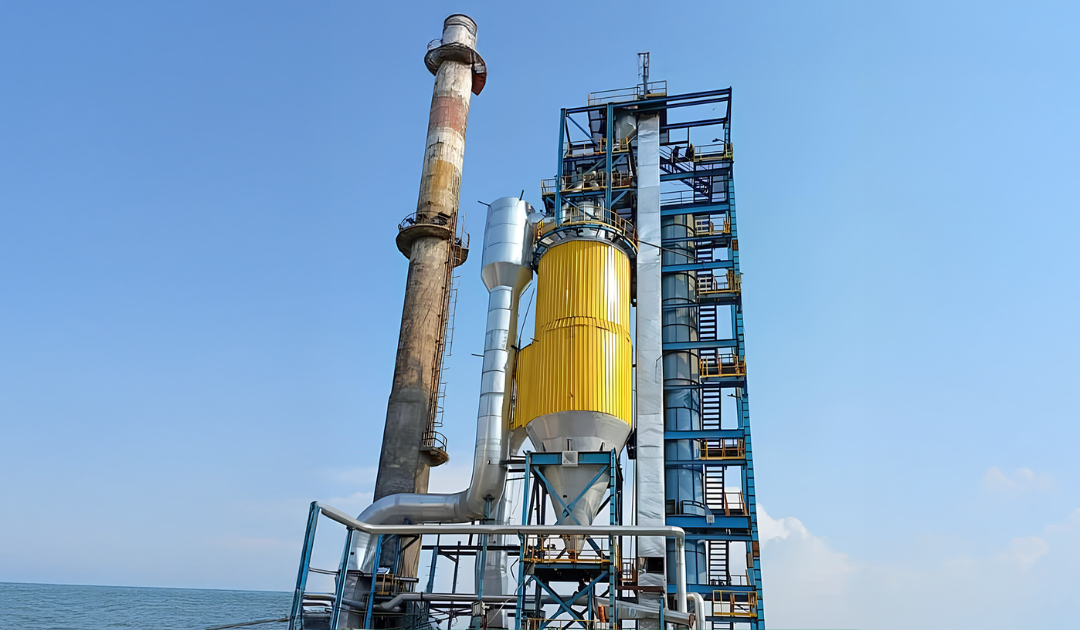
Why EGB Works Well for Mustard Husk & Rice Straw Biomass Boilers
Introduction
Biomass boilers have become an important source of renewable energy for industries aiming to reduce dependence on fossil fuels and lower carbon emissions. Agricultural residues such as mustard husk and rice straw are widely used as biomass fuels because they are readily available, cost-effective, and renewable. However, burning these materials generates a high volume of fly ash, fine particulate matter, and unburnt carbon, creating significant air pollution challenges.
Conventional dust collection systems often struggle to efficiently capture the lightweight and sticky particles produced by these fuels. This is where an Electrified Gravel Bed Precipitator (EGB) offers a practical and highly effective solution. By combining electrostatic charging with gravel bed filtration, EGB systems deliver excellent particulate removal efficiency while maintaining reliable performance even under demanding operating conditions.
For industries operating mustard husk and rice straw-fired biomass boilers, an EGB system provides improved emission control, operational stability, and regulatory compliance.
Understanding the Challenges of Mustard Husk & Rice Straw Combustion
Mustard husk and rice straw possess unique combustion characteristics that make emission control more demanding than conventional biomass fuels.
Some common challenges include:
- High fly ash generation
- Fine particulate emissions
- Low-density ash particles
- Variable moisture content
- High silica content (especially in rice straw)
- Sticky ash deposits
- Unstable combustion characteristics
These factors increase the burden on conventional pollution control equipment and often reduce collection efficiency if the wrong technology is selected.
Industries therefore require a system capable of handling both coarse and ultra-fine particles while maintaining consistent performance.
What is an Electrified Gravel Bed Precipitator (EGB)?
An Electrified Gravel Bed Precipitator (EGB) is an advanced air pollution control system designed to remove particulate matter from industrial exhaust gases.
Unlike traditional filtration systems, an EGB combines two highly effective mechanisms:
- Electrostatic charging of dust particles
- Mechanical filtration through a gravel media bed
As flue gases enter the system, suspended particles receive an electrical charge. The charged particles are then efficiently trapped within specially designed gravel media before clean air is released through the stack.
This dual-stage process provides significantly higher dust collection efficiency compared to conventional filtration systems under many biomass operating conditions.
Why Mustard Husk & Rice Straw Boilers Need Better Dust Collection
Agricultural biomass produces a different type of ash than coal.
Mustard husk combustion typically generates:
- Lightweight ash
- Fine carbon particles
- Volatile matter
Rice straw combustion produces:
- High silica ash
- Extremely fine particulate matter
- Sticky deposits
- Large ash volumes
These particles remain suspended in flue gas for longer periods, making them difficult to capture using conventional mechanical collectors.
Without efficient particulate removal, industries may experience:
- Excessive stack emissions
- Frequent Boiler downtime
- Poor boiler efficiency
- Environmental compliance issues
- Higher Maintenance costs
An EGB system addresses these problems through enhanced particle charging and multi-layer filtration.
High Collection Efficiency for Fine Particles
One of the biggest advantages of an Electrified Gravel Bed Precipitator is its ability to capture extremely fine particulate matter.
Rice straw combustion often produces PM10, PM2.5 & ultra fine particles that can easily escape traditional cyclones or mechanical collectors.
The electrostatic field inside the EGB charges these microscopic particles, making them easier to capture inside the gravel bed.
This results in:
- Lower & consist stack emissions
- Improved air quality
- Better regulatory compliance
- Higher collection efficiency
The technology is particularly effective where fine ash is the primary emission concern.
Excellent Performance with Sticky Ash
Mustard husk and rice straw generally produce ash which is sticky and hygroscopic in nature.
An EGB performs exceptionally well under these conditions because the gravel media provides a large filtration surface capable of handling significant particulate loads without compromising efficiency.
Its modular & robust design makes it suitable for industries operating biomass boilers continuously throughout the year.
Handles Variable Fuel Quality
Agricultural residues often vary depending on:
- Harvest season
- Moisture levels
- Storage conditions
- Fuel preparation
- Mixing ratios
Such variations directly affect combustion and emission characteristics.
An Electrified Gravel Bed Precipitator adapts effectively to these fluctuations, maintaining consistent dust collection performance across different fuel qualities.
This flexibility makes it a dependable solution for industries relying on seasonal biomass fuels.
Reduced Maintenance Requirements
Industrial facilities prefer pollution control equipment that requires minimal maintenance.
Compared to some conventional filtration systems, an Electrified Gravel Bed Precipitator offers:
- Durable construction
- Stable operation
- Lower lifecycle cost
- Long service life
- Reduced downtime
The gravel media can be maintained effectively through proper cleaning and periodic servicing, helping extend the equipment's operational lifespan.
Suitable for Continuous Industrial Operation
Industries operating biomass boilers often run production continuously.
Pollution control equipment must therefore deliver:
- Stable performance
- High reliability
- Consistent efficiency
- Long operational life
Electrified Gravel Bed Precipitators are designed for continuous industrial service, making them suitable for applications where uninterrupted operation is essential.
Helps Meet Environmental Regulations
Industrial emission standards continue to become more stringent across many sectors.
Efficient particulate control is essential for maintaining compliance with applicable pollution control norms.
By effectively reducing fly ash and suspended particulate emissions, an EGB assists industries in achieving cleaner exhaust while supporting responsible environmental practices.
Properly designed systems also help minimize visible stack emissions, contributing to improved workplace and community air quality.
Cost-Effective Long-Term Solution
Although installing advanced pollution control equipment requires an initial investment, long-term operational benefits often outweigh the upfront cost.
Industries may experience:
- Reduced maintenance expenses
- Lower energy consumption
- Improved equipment reliability
- Fewer operational interruptions
- Better compliance management
These advantages make the Electrified Gravel Bed Precipitator a practical investment for biomass-fired boiler operations.
Applications Across Multiple Industries
EGB systems are well suited for biomass boilers used in various industries, including:
- Biomass based power plants
- High temperature gas cleaning
- Agro-processing plants
- Textile manufacturing
- Paper mills
- Chemical industries
- Distilleries
- Power generation facilities
Wherever mustard husk or rice straw serves as boiler fuel, an Electrified Gravel Bed Precipitator can significantly enhance particulate emission control.
Why Choose Enviropol?
Selecting the right pollution control technology is just as important as choosing the right equipment supplier. Enviropol provides advanced Electrified Gravel Bed Precipitator solutions designed to meet the emission challenges associated with mustard husk and rice straw biomass boilers. With a focus on engineering excellence, dependable performance, and regulatory compliance, Enviropol delivers systems that help industries achieve cleaner operations while maintaining efficiency. From design and manufacturing to installation and technical support, the company is committed to providing reliable air pollution control solutions tailored to diverse industrial requirements.
Conclusion
Mustard husk and rice straw are valuable renewable fuels, but they present unique emission control challenges due to their high ash content and fine particulate generation. Traditional dust collection systems may not always provide the efficiency required for these demanding applications.
An Electrified Gravel Bed Precipitator (EGB) offers an advanced solution by combining electrostatic particle charging with gravel bed filtration to achieve superior particulate removal. Its ability to handle varying fuel quality, high ash loads, and continuous industrial operation makes it an excellent choice for biomass boilers.
By investing in the right pollution control technology, industries can improve operational efficiency, reduce environmental impact, comply with emission standards, and ensure cleaner, more sustainable biomass energy production.