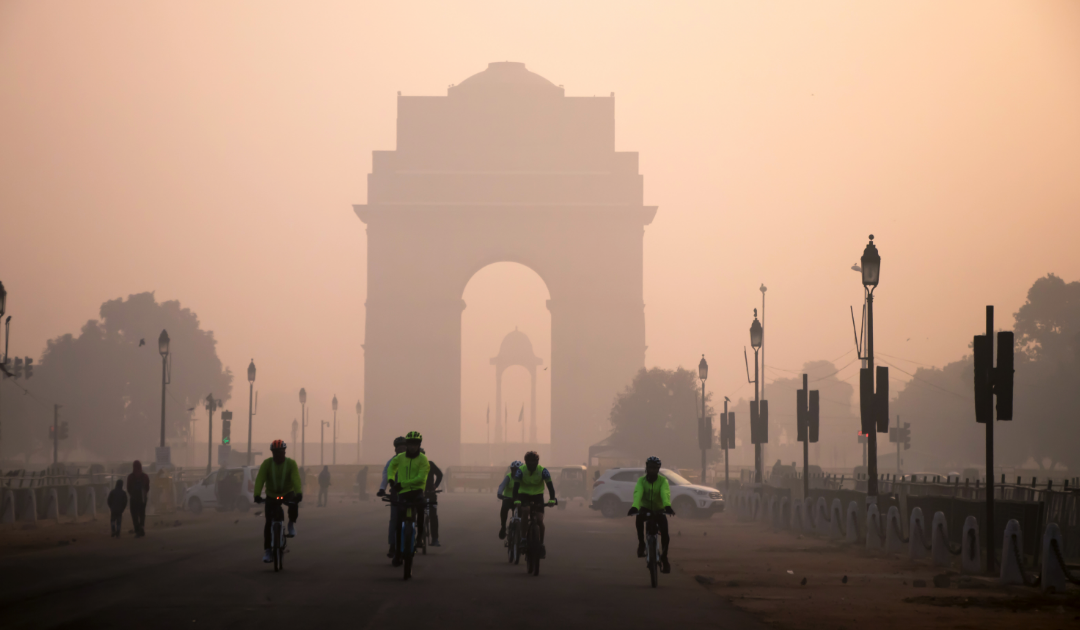
Why Delhi Chokes Under Smog and Pollution Every Winter?
Delhi is nearing a yearly crisis, every year, towards the end of winter. The skies change to grey, the visibility decreases, indexes of air quality skyrocket into the severe category, and millions of people have burning eyes, coughs, breathlessness, and future health risks. The same question that can be asked every year is a straightforward one but at the same time contentious, why does the Delhi suffocates under the smog and pollution each year during the winter?
There is no silver bullet to this problem and it is a complicated combination of geography, weather, human deeds and internal policy failure. It is important to understand these factors in order to come up with sustainable solutions.
Smog: What It Means to be More Than Pollution
Smog is not merely "dirty air." It is a lethal blend of contaminants including particulate matter (PM2.5 and PM10), nitrogen oxides, sulfur dioxide, carbon monoxide, aerosols and volatile organic compounds. Smog is formed when the pollutants are combined with the moisture and fog under particular weather conditions.
During winter, the air quality in Delhi creates a toxic brew of emissions held close to the ground, with a consequence of exposure and dire effects on the health of people.
The Geography of Delhi: A Natural Trap of the Pollution
Geographical positioning of Delhi contributes a great part in exacerbating the pollution during winter. The city is a landlocked area which is surrounded by the Indo-Gangetic plains. Pollutants cannot be dispersed by coastal winds and the surrounding Himalayan range has blocked the free movement of air masses.
Such a geographical location implies that once the pollutants have found their way in the airspace of Delhi, they would not have an easier way out. The issue is magnified in the winter when the speed of the wind decreases even more, literally transforming the city into a pollution basin.
Meteorological Conditions that aggravate winter smog
1. Temperature Inversion
Temperature inversion is one of the most important phenomena in winter. Under normal circumstances, the hot air at the surface of the ground ascends and in the process spreads pollutants in the air. During winter, though, a blanket of warmer air is formed above colder air nearer to the surface and with this comes the trapping of the pollutants near to the ground.
This layer of inversion may take days and hence dispersion is prevented and the level of pollution accumulates quickly.
2. Low Wind Speed
The calm winds occur during winter period. Pollution by cars, industries and other sources does not have much horizontal and vertical air movement and thus hangs on the city.
3. High Moisture and Fog
The higher humidity and the number of the fog-particles give surfaces on which the pollutants stick to, which results in the dense smog. This explains why the mornings of winter in Delhi usually start with very low-visibility.
4. Vehicular Emissions: A Perennial Playing Field.
There is a great vehicle density in Delhi. Millions of automobiles, two-wheelers, buses, and trucks release millions of nitrogen oxides and fine particulate matter daily.
In winter, engines are less efficient in burning fuel as they emit more. The traffic jams also exacerbate the situation because idle vehicles keep emitting pollutants without making any progress. Although there is an increase in fuel standards and emission norms, the number of vehicles is overwhelming and defeats such standards.
Power Plant and Industrial Emissions
Small-scale manufacturing units as well as the industries in and around Delhi, such as the pollution caused by the kilns and power plants, are also a contributor to the pollution during winter. Most of them are fed on coal, furnace oil, or other fuels with high emission.
Regulations are not followed uniformly even if they are in place. Winter atmospheric dispersion is lower and hence, industrial emission will have a significant influence on the air quality of the locality compared to other seasons.
Construction Dust and Urban Development
There is a continuous construction of roads, metros, buildings and flyovers in Delhi. Construction works produce heaps of dust, which is a significant contributor to PM10.
During winter seasons, the speed of wind is low and moisture is high, therefore, this dust is suspended in the air. Lack of adherence to dust-control measures like enveloping construction sites and sound management of the debris worsens the condition.
Stubble Burning: The Seasonal Spike
Stubble burning in other states such as Punjab and Haryana has been cited as one of the major causes of winter smog in Delhi. Once rice is harvested, the farmers clear the fields by burning crop residue to clear the fields soon enough to allow their next sowing season.
These fires spread the smoke to hundreds of kilometers, which is blown by the same winds to Delhi. Although this is not the only source of pollution, the stubble burning, in most cases, is combined with an already poor air quality, pushing the pollution levels to the severe category.
Domestic sources and biomass Burning
During winter, heating and cooking on biomass fuels like wood, coal and cow dung is more practiced especially in low-income regions. These fuels emit large quantities of pollutants.
Also, there is continued burning of waste, leaves, and garbage even though it has been banned, an action that leads to hotspots of pollution in the local areas of the city.
Firecrackers and Festive Pollution
Festivals such as Diwali usually fall during the period when winter sets in. The release of firecrackers by the particulate matter, heavy metals, and toxic gases occurs within a very brief period.
Even though there are bans and restrictions, partial compliance is that firecracker emissions continue to give drastic peaks in pollution, which are trapped by the poor weather conditions in winter.
Health Impact of Winter Smog
The pollution in Delhi in the winter has devastating health impacts and a wide spread. In the short-term, the exposure causes irritation of the eyes, infections of the throat, asthma attacks, and the decrease in the lung performance. Excessive exposure in the long term heightens the chances of developing long term respiratory illnesses, cardiovascular issues and even early mortality.
Especially vulnerable are children, the elderly and others with prior conditions. The financial price, or the expenses to the healthcare and the missed productivity cost, is immense.
The Function of Technology and Sustainable Solutions
Delhi has to deal with smog in winter and this issue will need policy reform, a behavior change and technological innovation. It is necessary to have more sophisticated pollution control mechanisms, cleaner industrial processes, and waste management.
Firms such as Enviropol are developing new filtration and emission control systems that can assist industries to cut the emission of particulate at the source. When used on a large scale, such technologies are found to be significant and play a key role in the long-term improvement of air quality.
What Can Be Done Differently?
1. Regional Coordination
The state boundaries are not respected by pollution. Regional strategy of working with Delhi and nearby states is necessary to deal with stubble burning, transport planning and industrial emissions.
2. Cleaner Transport
Rapid transition to the use of electric vehicles, betterment of the public transport system and avoidance of the use of personal vehicles can greatly reduce emissions.
3. Industrial Upgrades
Modern pollution control devices can be retrofitted in industries with the assistance of such companies as Enviropol and will allow reducing harmful emissions without reducing productivity.
4. Public Awareness and Participation
The citizens are also involved in responsible disposal of waste, minimized firecracker application, and promoting sustainable behaviors.
In the Future: Can the Capital of India Breathe?
The smog in Delhi during the winter is not unavoidable. It is the consequence of the causes that can be identified and the problems that can be solved. Higher policies, better enforcement, partnership within the region, and the acceptance of cleaner technologies advocated by other organizations like Enviropol is likely to bring the city closer to cleaner winters.
The task is enormous and so is the price of non-action. To have a message on why Delhi suffocates every winter is the first step to guarantee that the coming generations will be able to breathe better.