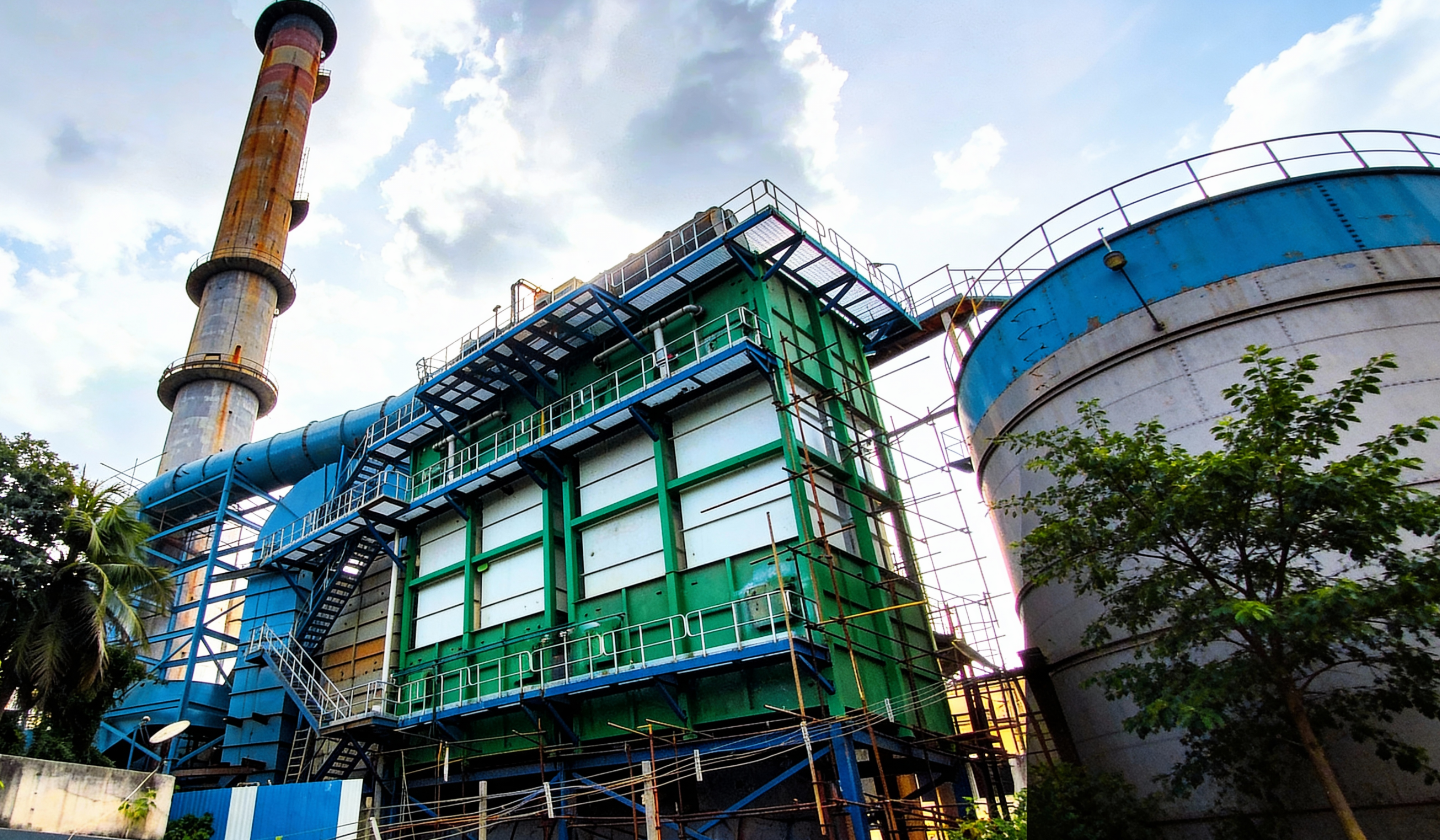
Why Wet ESP is the Best Available Technology (BAT) for Gas Cleaning
The industrial development has led to a lot of improvement in industrial manufacturing, production of energy and the improvement of the infrastructure. but it has also caused greater emissions of particulate matter, aerosols and poisonous gases into the atmosphere. To overcome these problems, industries are using advanced and efficient gas cleaning technologies as the part of the industrial air pollution control system. The Wet electrostatic precipitator (Wet ESP) is one of the most powerful and highly acceptable solutions to these technologies.
This article explains why Wet ESP is regarded as the Best Available Technology (BAT) in the cleaning of gases, with a special focus on the working principle, pros, and cons when compared with other systems, and how Wet ESP features in modern pollution control systems. Firms such as Enviropol are also doing their bit in ensuring that the Wet ESP systems are adopted by companies to ensure that they comply with strict environmental standards.
Introduction to Gas Cleaning Technologies
There are a number of gas cleaning technologies being used by modern industries to eliminate pollutants in exhaust gases. These include:
Modern industries use various gas cleaning technologies to remove pollutants from exhaust gases. These include:
• Dry Electrostatic Precipitators (ESP).
• Wet Scrubbers
• Cyclones
All these technologies have their advantages and disadvantages. Nevertheless, with increasingly tougher emission standards, particularly of fine particulate matter (PM2.5 and PM1), the conventional systems tend to fail. Here, the Wet electrostatic precipitator would be a better solution.
Wet Electrostatic Precipitator (Wet ESP): An Overview
A Wet electrostatic precipitator is a high-tech air pollution control device that uses wet electrostatic precipitation to remove small particles and aerosols, as well as acid mist and other air pollutants, in the gases flowing through it. Wet ESP works within a saturated environment unlike dry systems, therefore it is very effective in capturing the ultrafine particles.
Research has indicated that electrostatic precipitators have the capability to reach removal efficiencies of up to 99.9 per cent of particulate matter and thus are considered one of the most effective solutions to emission control.
Wet ESP is especially applicable in the industries including:
• Power plants
• Industries of steel and cement.
• Chemical and petroleum chemical plants.
• Waste incineration units
Wet ESP Working Principle
The Wet ESP working principle is important to understand the effectiveness of the working principle.
To carry out the operation, the following steps are involved:
1. Quenching of the Gas
In this stage, hot industrial gas is cooled rapidly using water sprays, reducing temperature and preparing the gas stream for efficient particle removal in the Wet ESP system.
2. Ionization of Gas Stream
The contaminated gas is subjected to a high-voltage electric field whereby, particles are charged with electricity.
3. Particle Migration
The electrostatic forces cause charged particles to move towards oppositely charged collection electrodes.
4. Collection of Particles
On the surface of collection electrodes, particles are deposited.
5. Intermediate Washing
Intermediate washing removes accumulated particles and contaminants from collection surfaces, ensuring continuous efficiency, preventing particle build-up, and maintaining stable performance within the Wet ESP system.
Wet ESP, unlike the dry ESPs, employs water to continually clean away particles that are collected, preventing re-entrainment.
This is an unending wash system so that the system is clean and efficient even with sticky or wet particles.
Wet ESP works in saturated conditions and is normally applied in eliminating liquid droplets and acid mist in gas streams.
Why Wet ESP is Considered BAT (Best Available Technology)
1. Exemplary Performance on the small particles.
The capability of Wet ESP to intercept fine and ultrafine particles is one of the greatest benefits of the Wet ESP. The traditional systems fail to control particles of the 0.1-1 micron range, whereas Wet ESP is very effective.
Research indicates that Wet ESP systems can have filtration efficiencies of over 98.5% of particulate matter and black carbon.
This renders it the best in satisfying high levels of emission requirements.
2. Works well with Sticky and Wet Pollutants.
Dry ESP systems tend to experience problems with respect to sticky or moist particles, and thus, operational inefficiency. Wet ESP removes this issue by doing a continuous washing.
The self cleaning mechanism guarantees:
• No particle buildup
• Consistent performance
• Reduced maintenance
This renders Wet ESP an effective element in any industrial air pollution control system.
3. No Re-entrapment of Particles.
In dry systems, particles collected may re-enter the stream of gas during the cleaning process. Wet ESP does not have any such problem at all since the particles are washed off instantly.
• Higher collection efficiency
• Stable operation
• Lower emissions
4. Capacity to deal with Saturated Gas Streams.
Unlike the dry ESP system which might fail in situations where moisture levels are high, wet ESP will work well in high-humidity and saturated environments.
This renders it especially appropriate to:
• Desulfurization systems of flue gases.
• Chemical industries
• Marine exhaust systems
5. Multi-Pollutant Removal Capability
Wet ESP is capable of removing:
• Fine particulate matter
• Acid mist (e.g. sulfuric acid)
• Heavy metals
• Aerosols
This multi-functional feature provides it with an advantage on other gas cleaning technologies.
6. Low Maintenance and High Reliability.
Wet ESP systems are less complicated with fewer moving parts, and do not have mechanical cleaning systems. The washing cycle minimizes the need of maintenance.
This leads to:
• Lower operational costs
• Higher uptime
• Long equipment life
Wet ESP vs Dry ESP
A key comparison in understanding BAT status is Wet ESP vs Dry ESP.
| Parameter | Wet ESP | Dry ESP |
|---|---|---|
| Particle Size Handling | Excellent for ultrafine particles | Less effective for fine particles |
| Moisture Handling | Works in saturated conditions | Performance drops in high humidity |
| Maintenance | Low due to self-cleaning | Requires mechanical cleaning |
| Re-Entrapment | No re-entrainment | Possible during cleaning/rapping |
| Efficiency | Up to 99.9%+ | High but lower for fine particles |
Dry ESP is very effective with bigger particles but cannot cope with fine particulate matter because of low electrical mobility.
Wet ESP eliminates these shortcomings and hence makes Wet ESP a better solution.
Applications of Wet ESP
Wet ESP is used in most industries:
Power Plants
Removes fly ash and fine particulate matter.
Steel Industry
Manage furnaces and sinter plants emissions.
Chemical Industry
Eliminates acid mist and other dangerous pollutants.
Marine Sector
Lessens ship emissions of exhausts.
Waste Incineration
Traps toxic substances and heavy metals.
Environmental and Regulatory Benefits
The Wet ESP plays a significant role in ensuring environmental protection by:
• Cutting PM2.5 and PM10 emissions.
• Controlling toxic aerosols
• Improving air quality
It assists industries to adhere to:
• EPA standards
• European emission norms
• Regulations of pollution control in India.
Wet ESP Technology Future
The need to implement high-quality gas cleaning technologies is on the rise because of:
• Stricter emission norms
• Focus on sustainability
• Increase in industry.
Wet ESP will significantly contribute in future industrial air pollution control system, particularly with innovations in:
• Hybrid systems
• Energy efficiency
• Digital monitoring
One of the companies like Enviropol is driving this change by providing innovative Wet ESP systems based on the requirements of the industry.
Conclusion
The Wet electrostatic precipitator has demonstrated itself as the Best Available Technology (BAT) in cleaning gases because of its unrivaled efficiency, versatility and reliability.
With its high-level Wet ESP working principle, as well as its excellent performance in capturing fine particles, Wet ESP performs better compared to traditional systems. The analysis of Wet ESP vs dry ESP vividly points out its benefits particularly when dealing with ultrafine particle and saturated gas streams.
With industries increasingly adopting new technologies of cleaning the air in the industries, Wet ESP is leading in innovation in the industrial air pollution management systems. Through the assistance of technology providers such as Enviropol, industries can enjoy cleaner emissions, compliance with regulations and sustainable future.