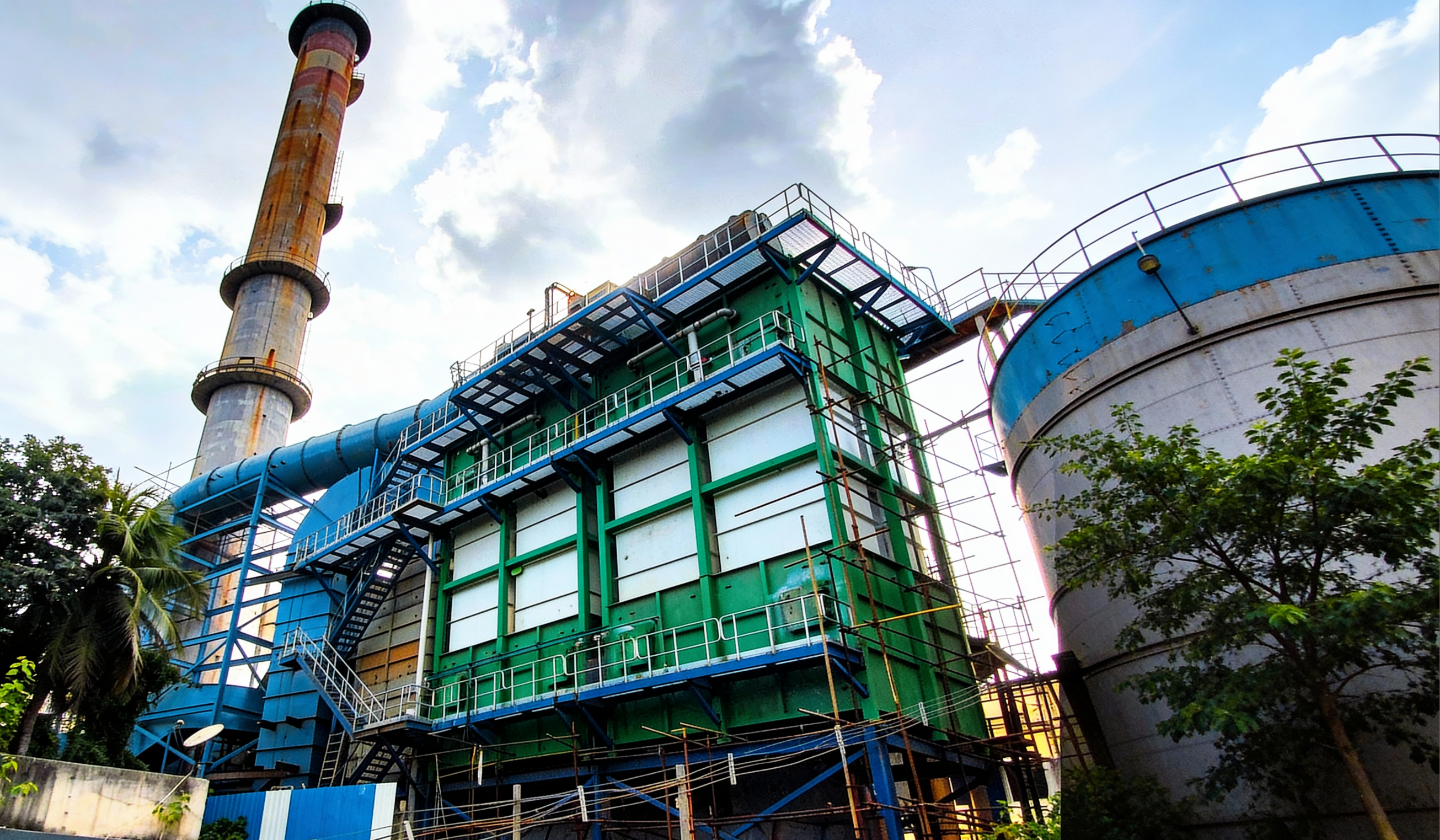
Wet Electrostatic Precipitator (WESP) Used as a Polisher in Carbon Capture
Introduction
Carbon capture technologies are emerging as a major part of the decarbonization solutions for industries across the globe as companies strive towards carbon neutrality and tighter emission limits. The efficiency of the carbon capture systems, however, will greatly rely on the quality of the flue gas fed to the capture system. Despite conventional pollution abatement techniques such as dust collection, flue gas desulfurization (FGD), and NOx reduction, small quantities of aerosols, acid mists, and ultra-fine particulate matter can still be found in the gas stream.
These leftover chemicals can negatively impact carbon capture efficiency, cause solvent losses, and lead to equipment fouling. In response to this, industries have begun implementing Wet Electrostatic Precipitators (WESPs) as the final purification step before carbon capture. A WESP system acts as a "gas polishing" system, ensuring that the flue gas fed into the carbon capture unit is very clean and suitable for efficient CO₂ removal.
What is a Wet Electrostatic Precipitator (WESP)?
The Wet Electrostatic Precipitator (WESP) is an advanced air pollution control system used to clean industrial air pollution gas streams of fine particulate matter, aerosols, acid mists, condensable pollutants, and liquid droplets. A WESP flushes the collection surfaces with water on an interval basis, eliminating the need for particle accumulation and re-entrainment, as in conventional dry electrostatic precipitators.
It is a technology based on electrostatic forces, charging particles, and drawing them towards the grounded collection electrodes. The contaminants collected will be continuously washed away by water, thus maintaining high collection efficiency and stable long-term performance.
A WESP can also serve as a tail end gas cleaning system in a modern emissions control system because of its ability to remove very fine particles that other systems may miss.
Understanding the Concept of Gas Polishing
The last pollution control process or tail end gas cleaning process in an industrial emission control system to remove very finel amounts of pollutants is called "polishing. Although most pollutants may be removed upstream with equipment, even trace amounts of residual aerosols and acid mist can pose serious operational problems for carbon capture systems.
A polishing system is used to maximise the cleanliness of the gas stream ahead of any sensitive downstream equipment. In carbon capture applications, WESPs perform this function by filtering out ultra-fine particulate matter and aerosol contaminants, which might otherwise affect the carbon capture effectiveness and solvent performance.
This is the last cleaning action that will help ensure maximum system reliability and effectiveness during carbon capture operations.
Why Carbon Capture Systems Require Polishing
Highly purified flue gas is necessary to ensure optimal operation of carbon capture technologies, especially of solvent-based post-combustion technologies. Trace contaminants may remain in the gas stream after conventional air pollution control equipment.
Sulfuric acid mist, ammonium sulfate aerosols, condensable particulate matter, heavy metals and fine dust particles are examples of such contaminants. These materials can affect the solvents, maintenance costs, corrosion, and capture efficiency if they enter the carbon capture unit.
A WESP is the final barrier to ensure these contaminants are filtered out before the carbon dioxide separation process begins.
Position of WESP in a Carbon Capture System
The WESP is installed after the main flue gas cleaning steps and before the carbon capture unit in a typical industrial carbon capture setup.
Treatment may involve:
• Particulate control systems
• Flue Gas Desulfurization (FGD)
• NOx reduction technologies
• Gas cooling systems
• Wet Electrostatic Precipitator (WESP)
• Carbon capture unit
In this instance, the WESP is used as a polishing unit to remove any remaining contaminants that pass through prior treatment units. It delivers an ultra-clean gas stream, which helps to increase efficiency and stability in the downstream carbon capture process.
How WESP Functions as a Polisher
Flue gas flows through the Wet Electrostatic Precipitator, where the flue gas is drawn through a high-voltage electrostatic field created by the discharge electrodes. This field gives particles, including aerosol particles, an electric charge.
The charged particles are collected as they move towards grounded collection surfaces. The collection surfaces are washed with water during intervals, preventing pollutants from building up and maintaining collection efficiency.
The WESP is used as a polishing system and eliminates a variety of contaminants that are typically hard to treat in conventional systems, such as:
• Sulfuric acid aerosols
• Condensable particulate matter
• Fine metal particles
• Ammonium sulfate mist
• Organic aerosols
• Submicron particulate matter
The final purification step is highly valuable for improving gas quality before carbon capture.
Key Benefits of WESP as a Polishing Stage
The main benefit of employing a WESP as a polishing system is its capability to remove ultra-fine particles, which are not necessarily effectively removed by traditional filters and scrubbers.
The technology helps prevent degradation of the solvent in carbon capture units caused by aerosol contamination. Increased solvent degradation results in reduced operating costs and increased system efficiencies.
WESPs are also effective at reducing corrosion risk by eliminating acid aerosols that can damage equipment in downstream facilities. They can continuously change washing surfaces, which means they can perform well even in difficult operating conditions.
WESPs directly help enhance carbon capture efficiency and plant reliability by providing a cleaner gas stream.
Removal of Sulfuric Acid Mist
One of the most troublesome pollutants found in carbon capture applications is sulfuric acid mist. It is commonly generated during the burning of sulfur-containing fuels and during the cooling and treatment of flue gas.
Sulfur dioxide can be effectively removed in the FGD system, but the trace sulfuric acid aerosols remain. They are difficult to capture due to their small particle size, especially these aerosols.
WESPs are also very good at removing sulfuric acid mist and are among the best technologies known to reduce these emissions. They can remove acid aerosols, which can degrade carbon capture solvents and also improve system performance.
Improving Solvent Performance in Carbon Capture
CO₂ is often captured from flue gas streams with chemical solvents. These solvents may be substantial investments in the operation and must be carefully managed to keep them performing effectively.
Residual aerosols that penetrate the absorber can contaminate and degrade the solvent. It results in increased maintenance demands, replacement costs, and decreased capture efficiency.
As a polishing step, the WESP reduces aerosol carryover and solvent impurities. A cleaner gas stream means capture systems can be more efficient and can have a longer solvent life.
Environmental Benefits of WESP Polishing Systems
Wet Electrostatic Precipitators offer more environmental benefits than carbon capture benefits.
WESPs can remove ultra-fine particles and acid mists, helping reduce emissions that contribute to air pollution and environmental degradation. They are also very effective at capturing iron and steel, which can help meet stricter emission standards.
Better reductions in emissions also enhance local air quality and reduce harmful pollutant emissions into the air. WESPs are part of the suite of technologies available to reduce industrial emissions.
Industries Utilising WESP Polishing Technology
WESP technology is being used in several industries for carbon capture.
In coal-fired power plants, WESPs are used to remove the remaining sulphuric acid mist before carbon capture. They are used in cement manufacturing plants to control fine particulate emissions and capture efficiency. WESP polishing systems are also suitable for chemical processing plants, waste-to-energy facilities, refineries and metal processing facilities.
With the continued growth of carbon capture projects in industrial applications, there is a growing need for effective polishing technologies.
Future Role of WESP in Carbon Capture Projects
With the governments and industries aiming for ambitious net-zero targets, the carbon capture infrastructure is likely to see significant growth. As more carbon capture plants are built, gas treatment systems will need to be even more efficient at reducing emissions from complex industrial gases.
The use of Wet Electrostatic Precipitators is expected to be a key component of these projects because of their demonstrated ability to capture trace contaminants and maximise capture efficiency effectively. New in the field of power supply systems, digital monitoring, automation and electrode design will continue to enhance the efficiency and reliability of WESP.
The technology is projected to become a standard feature of CO₂ capture systems for use in future plants.
Enviropol Expertise in WESP and Carbon Capture Support
Enviropol has a niche expertise in advanced air pollution control and flue gas treatment technologies that support industries' sustainability goals. The company offers tailor-made Wet Electrostatic Precipitator solutions to meet stringent emission control requirements across various industries.
Enviropol's WESP systems can be incorporated into the overall flue gas treatment train to improve gas quality, enhance carbon capture, and ensure regulatory compliance. With its engineering know-how, it empowers businesses to adopt robust, effective, and forward-thinking emission control solutions.
Conclusion
Today, Wet Electrostatic Precipitators are an indispensable polishing technology in today's modern carbon capture systems. Although primary pollution control equipment has captured most pollutants, a fraction of residual aerosols and ultra-fine particles can affect capture performance and operational efficiency.
WESPs serve as the final polishing step, removing the remaining contaminants and producing the ultra-clean gas streams needed for effective CO2 capture. They are among the most valuable technologies in advanced emission control systems, with their performance in controlling acid mists, aerosols, and submicron particulate matter.
In the future, WESPs will likely continue to play a vital role in industrial decarbonization efforts, supporting industries in achieving cleaner operations, better environmental compliance, and a sustainable future.