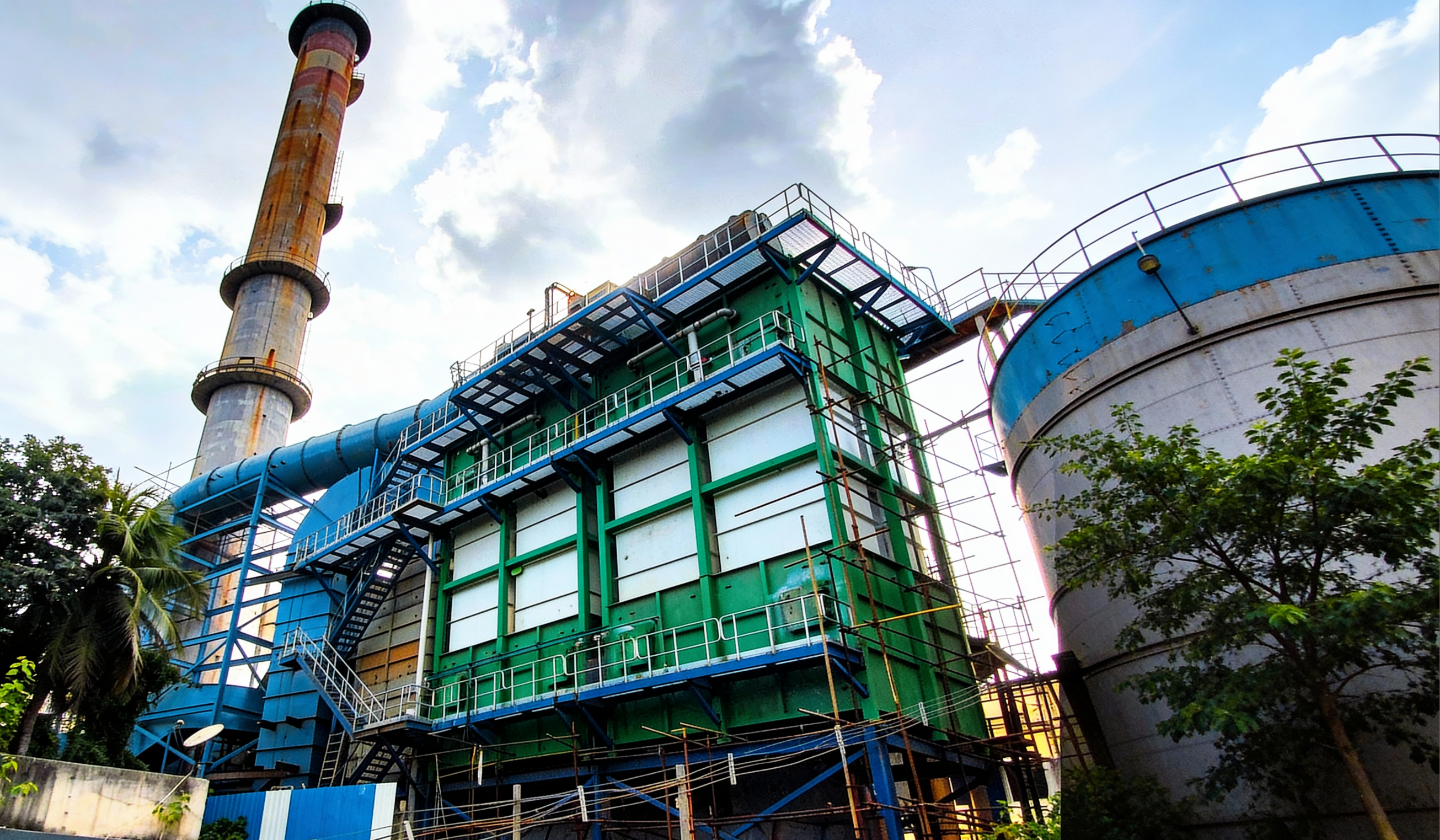
Wet Electrostatic Precipitator (WESP) for Capturing Aerosols in Carbon Capture
Introduction
The global drive towards carbon capture technologies to reduce GHGs has led to a focus on the efficient removal of aerosols and fine particulate matter from flue gas streams. Aerosols are a major problem in carbon capture systems, as they could decrease efficiency, contaminate solvents, increase maintenance needs, and cause emissions to be released into the air.
The Wet Electrostatic Precipitator (WESP) is one of the most effective technologies to control these ultra-fine particles and aerosols. WESPs are engineered to capture submicron particles, acid mists, condensable aerosols and other fine particles that are more difficult to remove from the atmosphere using conventional particulate control methods.
The use of WESPs has become a vital part of modern carbon capture plants' flue gas treatment systems. They aid environmental compliance and operational reliability and enhance gas quality before carbon dioxide separation.
What is a Wet Electrostatic Precipitator (WESP)?
Wet Electrostatic Precipitator (WESP) is an air pollution control equipment to remove extremely fine particulate, liquid droplets, aerosols and acid mists from industrial gas streams. It works on electrostatic attraction, in which charged particles are captured on surfaces with a grounded charge.
WESPs continuously wash the collection surfaces with water or another liquid, unlike dry electrostatic precipitators. This eliminates the re-entrainment of particles and helps to remove sticky, wet, or corrosive particles efficiently.
WESPs are utilised in sectors like power plants, chemical processing, metal manufacturing, sulfuric acid manufacturing, incineration, and carbon capture, where the gas streams must be extremely clean.
Why Aerosol Removal is Critical in Carbon Capture Systems
Carbon capture systems, especially solvent-based post-combustion systems, are highly sensitive to flue gas impurities. More traditional pollution control equipment will effectively collect larger particles and gaseous pollutants, but aerosols may remain in the gas stream.
These aerosols may present some operational difficulties. They can enter the carbon capture units, promote solvent degradation, cause corrosion, and cause solvent loss due to mist. Aerosol emissions can also affect environmental compliance and the overall efficiency of carbon capture operations.
The use of a WESP upstream of the carbon capture unit enables industries to significantly reduce aerosol levels and produce a cleaner, more stable gas stream for CO₂ removal.
Understanding Aerosols in Industrial Flue Gas
Aerosols are particles of solid or liquid suspended in the air stream. Aerosols produced in industrial processes may arise from combustion, chemical reactions, condensation, and pollutant control systems.
The common aerosols in flue gas are:
• Sulfuric acid mist
• Ammonium sulfate particles
• Condensable particulate matter
• Heavy metal aerosols
• Organic compounds
• Fine ash particles
• Solvent droplets
Many of these particles are less than 1 micron in size and would not be easily removed by conventional filtration systems.
How a Wet Electrostatic Precipitator Works
A wet electrostatic precipitator is the electrostatic principle used to remove aerosols and fine particles from flue gas. The process begins when the contaminated gas enters the WESP Chamber.
High-voltage discharge electrodes produce a powerful electric field within the unit. When the gas flows through this field, the particles and droplets are electrically charged. The charged particles are then pulled toward the grounded collection surfaces.
The collection surfaces in WESP are constantly cleaned by water sprays or water films, unlike in dry ESP systems. The contaminants are washed out and extracted from the system as a liquid stream.
This continuous cleaning helps prevent particles from accumulating and enables WESPs to maintain very high collection efficiencies over long periods.
Role of WESP in Carbon Capture Applications
WESPs are typically placed downstream of other major components of the flue gas treatment system, such as particulate removal equipment and flue gas desulfurization units, in carbon capture facilities.
Their main purpose is to remove aerosols, acid mist that may remain after conventional pollution abatement systems have removed pollutants. This final cleanup process ensures that the gas entering the carbon capture unit is extremely clean.
WESPs enhance the carbon capture performance through:
• Minimising solvent losses due to aerosols
• Minimising equipment fouling
• Lowering maintenance requirements
• Preventing corrosion
• Enhancing capture efficiency
• Supporting environmental compliance
WESP technology is becoming an integral part of integrated emission control systems as carbon capture projects spread.
Key Benefits of Wet Electrostatic Precipitators
Wet Electrostatic Precipitator (WESP) offer several advantages over traditional particulate control equipment.
Their best attribute is the ability to trap very fine particles, even those smaller than 1 micron. The particles are often difficult to capture with conventional ESP, cyclones, or scrubbers.
WESPs also achieve very high removal efficiencies for sulfuric acid mist and condensable particulate matter. This is helpful in facilities with flue gas desulfurization (FGD), which can produce acid mist.
WESPs do not have any re-entrainment problems as the collection surfaces are continuously washed. This means long-term stability and reduced maintenance needs.
Also, WESPs can perform well in high-humidity settings where dry collection technologies might fail.
Integration with Flue Gas Treatment Systems
Pollution control technologies are applied at modern carbon capture plants to work in unison to provide optimal performance.
A common flue gas treatment train could consist of:
• Cyclone separators
• Baghouse filters
• Electrostatic precipitators
• Flue Gas Desulfurization (FGD) systems
• NOx reduction technologies
• Wet Electrostatic Precipitators
• Carbon capture units
In this series, the WESP can be considered the last polishing step before carbon capture. It can efficiently remove trace aerosols and ultra-fine particles, which enhances the overall efficiency of the system.
Industries can leverage the benefits of WESPs as part of their flue gas treatment systems to reduce pollution emissions while optimising carbon capture.
Applications of WESP Technology
Wet Electrostatic Precipitators are widely applied in various industries where very fine particles need to be removed.
In coal-fired power plants, WESPs can be used to control emissions of sulfuric acid mist and fine particulate. They can collect corrosive aerosols and process mists in chemical manufacturing plants.
The technology is also widely used in:
• Waste-to-energy plants
• Sulfuric acid production
• Metal processing industries
• Petrochemical facilities
• Biomass power plants
• Carbon capture installations
High-efficiency aerosol control technologies are needed as emissions requirements get tougher.
Environmental Benefits of WESP Systems
Wet Electrostatic Precipitator (WESP) environmental advantages are not just those of better carbon capture.
WESPs remove aerosols and ultra-fine particles, which help reduce visible emissions and improve ambient air quality. They collect acid mists and toxic air pollutants, helping to meet more stringent environmental laws.
This also helps improve public health impacts from particulate emissions, as reducing them removes airborne pollutants that could affect the respiratory system.
In addition, improved flue gas quality enhances the efficiency of downstream carbon capture technologies, thereby more effectively lowering greenhouse gas emissions from industries.
Challenges and Considerations
Although WESP technology has many benefits, it must be properly designed and operated to ensure optimal performance.
Some of these are gas composition, moisture content, particle properties, flow distribution and maintenance. The materials used to construct the components should also be carefully chosen for a corrosive operating environment.
Consistent collection efficiency and long-term reliability are achieved through regular monitoring and maintenance. However, the introduction of new automation and monitoring systems has ushered in more efficient and predictable operation of WESP.
Future Trends in WESP Technology
The role of WESP in integrated pollution control systems is likely to grow as industries strive to achieve net-zero emission goals.
Some future developments are improvements to the electrode designs, the power supply system, monitoring systems, and AI to optimise performance. These innovations are designed to improve collection efficiency, save energy, and reduce maintenance.
The rising acceptance of carbon capture technology is also boosting the demand for highly effective aerosol control systems. It is expected that WESPs will be used in most carbon capture plants globally in the future.
Enviropol's Expertise in WESP Solutions
Enviropol is a company that specialises in state-of-the-art air pollution control technologies, such as Wet Electrostatic Precipitators for industries with challenging air pollution requirements. The company's solutions enable industries to achieve the highest possible rate of particulate control, flue gas quality and environmental compliance.
Enviropol's WESP technology is integrated into comprehensive flue gas treatment systems, enabling industries to prepare for CCUS implementation, reduce emissions, and enhance operational efficiency.
Enviropol, an innovator, engineering expert, and sustainability champion, continues to provide trustworthy solutions to address modern emissions challenges.
Conclusion
In carbon capture applications, Wet Electrostatic Precipitators (WESP) are an indispensable technology for capturing aerosols and ultra-fine particulate matter. They are very efficient at cleaning flue gas for carbon dioxide separation because they can capture submicron particles, acid mists, and condensable aerosols.
As carbon capture adoption continues to grow, the importance of high-performance aerosol control systems will only increase. By integrating WESPs into flue gas treatment processes, industries can improve carbon capture efficiency, reduce environmental impact, and comply with evolving emission standards.
Through advanced WESP and pollution control solutions, Enviropol helps industries move closer to cleaner operations, enhanced sustainability, and a lower-carbon future.