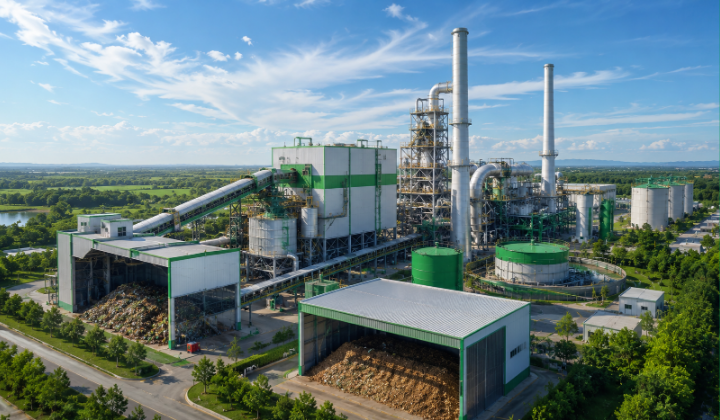
Waste-to-Energy & New-Age Fuels
In an era of global efforts towards reducing carbon emissions and enhancing resource utilisation, the demand for cleaner, more sustainable energy sources has grown stronger. The use of traditional fossil fuels still faces many challenges from an environmental perspective due to impacts such as greenhouse gas emissions and resource depletion. Industries, in turn, are seeking new solutions for energy generation and management that leverage waste.
The most encouraging growth in this field is the potential for waste-to-energy, advanced green fuel technologies, and the overall increase in the use of alternative fuels in industry. Such innovations not only contribute to a cleaner and more sustainable industrial future but also help reduce waste in landfills.
Understanding Waste-to-Energy Solutions
Waste-to-energy technologies are those that transform municipal, industrial, agricultural, and commercial waste into usable energy, such as electricity, heat, or fuel. These technologies capture valuable energy from waste materials, rather than letting it sit in landfills.
Waste-to-energy systems are a vital part of modern waste management, producing renewable energy from waste and minimising environmental pollution. The energy saved by utilising waste materials can help industries become more efficient in their resource use, promoting sustainable practices.
These solutions are closely aligned with international efforts to promote a circular economy that treats waste as a resource rather than a disposal problem.
Alternative Fuels in Industry: Reducing Dependence on Fossil Fuels
Alternative fuels are becoming increasingly popular in industry, changing how industrial buildings, power plants, and industrial processes use energy. Alternative fuels are fuels that aren't produced from conventional fossil fuels and can sometimes be alternatives to or supplements to them.
Industries are increasingly utilising:
• Biomass fuels
• Refuse-derived fuel (RDF)
• Waste-derived fuels
• Agricultural residues
• Industrial by-products
• Biofuels
The use of these industrial fuel alternatives not only reduces carbon emissions but also ensures a steady supply of energy for energy-intensive industrial processes.
Environmental laws are becoming stricter, and alternative fuels are a key element in long-term industrial sustainability strategies.
Refuse-Derived Fuel (RDF): Turning Waste into Energy
Refuse-derived fuel (RDF) is one of the most popular waste-based fuels in use today. RDF is generated by processing municipal solid waste and extracting recyclable materials, including metals, glass, and inerts. The remaining combustible material is then converted into fuel.
RDF commonly contains:
• Plastics
• Paper
• Cardboard
• Textiles
• Packaging materials
The resulting fuel can be used in cement kilns, industrial boilers, and power generation facilities.
The use of Refuse-derived fuel (RDF) offers several advantages:
• Reduced landfill dependency
• Reduce fossil fuel usage
• Improved waste management
• Reduced greenhouse gas emissions
• Enhanced resource recovery
The RDF has emerged as a viable and economically sustainable approach to support the clean energy transition in various sectors.
Biomass Fuel Applications in Modern Industry
The other significant group of renewable energy sources is biomass. Biomass fuels are obtained from organic residues of agriculture and forestry, crop by-products, and organic industrial residues.
Common biomass fuel applications include:
• Industrial boilers
• Steam generation systems
• Power plants
• Combined heat and power systems
• Manufacturing facilities
Biomass can also provide a renewable energy source, which has the potential to lessen reliance on fossil fuels and benefit local economies in agriculture and forestry.
If managed sustainably, biomass can help mitigate carbon emissions and enhance energy security goals.
Green Fuel Technology and Industrial Innovation
With advances in Green Fuel technology, the production of cleaner fuels is gaining momentum across various sectors. Current fuel technologies aim to convert as much energy as possible into usable energy while reducing environmental impact.
Innovations include:
• Advanced waste processing systems
• Fuel pellet production
• High-efficiency combustion technologies
• Waste gasification
• Pyrolysis systems
• Biofuel production technologies
These technologies are designed to improve the use of waste materials in industry and to reduce emissions and energy consumption.
Green fuel technologies will be an important part of the future energy system as industrial sustainability becomes a global priority.
Renewable Energy from Waste and the Circular Economy
The principles of a circular economy are closely connected to the concept of renewable energy from waste. The traditional linear economy is based on the principle of extracting, using and discarding. In contrast, circular economy models emphasise the recovery of value from materials throughout their life cycle.
Waste-to-energy systems contribute to circular economy solutions by:
• Recovering energy from waste streams
• Reducing landfill volumes
• Conserving natural resources
• Supporting sustainable manufacturing
• Creating secondary fuel resources
It is a strategy that helps industries minimise their environmental footprint and enhance their efficiency and resource utilisation.
Supporting the Clean Energy Transition
Renewable energy technology, energy efficiency and new types of fuels are all necessary components of the global clean energy transition. Waste-to-energy technologies and alternative fuels are playing an increasingly important role in this transition.
By adopting sustainable energy sources, industries can:
• Reduce carbon footprints
• Meet environmental compliance requirements
• Improve energy security
• Lower operational costs
• Enhance corporate sustainability performance
Combining waste-derived fuels and renewable energy systems aids both environmental goals and long-term business resilience.
The Future of Sustainable Industrial Energy
The need for waste-to-energy solutions, alternative fuels in industry, and advanced green fuel technology is likely to increase substantially as industries keep striving to become decarbonised.
Future developments may include:
• Higher-efficiency waste processing technologies
• Expanded RDF utilization
• Advanced biomass conversion systems
• Carbon-neutral fuel production
• Smart energy recovery systems
• Integrated circular economy infrastructure
These innovations will contribute to more sustainable, resource-efficient energy models across industries.
Conclusion
Worldwide, industrial energy strategies are shifting toward sustainable energy sources. By implementing waste-to-energy (WtE) technologies such as refuse-derived fuel (RDF), biomass fuel applications, and other industrial fuel alternatives, companies can minimise environmental and resource impacts while boosting overall efficiency.
Waste-to-value technologies are expected to become more significant as the global transition to clean energy accelerates, helping ensure sustainable growth by turning waste into valuable energy resources. Industries can play their part in a more resilient and environmentally responsible future by incorporating renewable energy generated from waste streams and new green fuel technologies.
We see an opportunity at Enviropol to continue helping industries leverage advanced, environmentally and energy-efficient solutions to enable sustainability, optimal operations, and long-term environmental care.