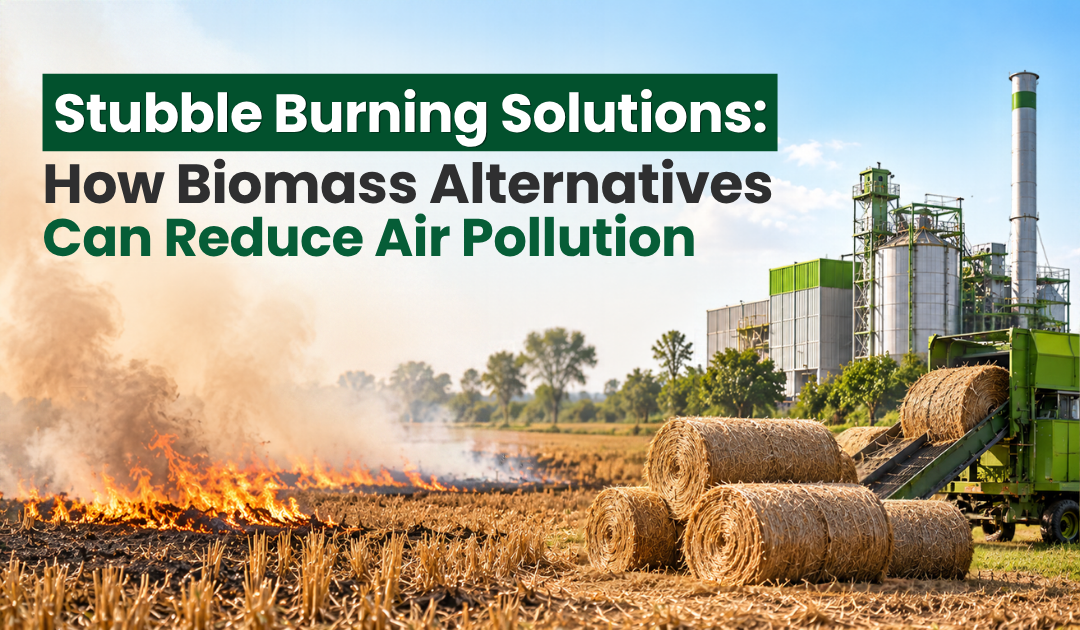
Stubble Burning Solutions: How Biomass Alternatives Can Reduce Air Pollution
Every year, stubble burning becomes a major environmental concern across North India, particularly after the rice harvesting season. Farmers often burn leftover crop residue because they need to prepare their fields quickly for the next crop. However, this practice releases smoke, particulate matter, and harmful gases that contribute to poor air quality. Exploring effective stubble burning solutions is therefore essential for protecting public health while supporting agricultural productivity. Converting agricultural waste into useful resources offers a practical alternative. Through biomass fuel production, biomass energy generation, and improved crop residue management, agricultural waste can become a valuable industrial resource instead of an environmental burden. Enviropol supports industrial environmental management through pollution control and biomass-related solutions that can contribute to cleaner, more resource-efficient operations.
Why Is Stubble Burning a Serious Environmental Problem?
Stubble burning is a major environmental concern, particularly in agricultural regions where crop residue is burned after harvesting to clear fields for the next sowing season. Although farmers may use this method because it is quick and convenient, the practice releases substantial amounts of smoke and harmful pollutants into the atmosphere. These emissions can affect local air quality and contribute to pollution across neighbouring regions, depending on wind patterns and weather conditions.
Stubble burning releases fine particulate matter, carbon monoxide, nitrogen oxides, and other pollutants. Fine particles can penetrate deep into the respiratory system, while other pollutants can contribute to atmospheric pollution and affect environmental quality. When emissions from agricultural burning combine with traffic pollution, industrial emissions, construction dust, and unfavourable winter weather conditions, air quality can deteriorate significantly. Low wind speeds and temperature inversions can further limit the dispersal of pollutants, allowing them to accumulate near ground level.
The environmental and health consequences of stubble burning include:
- Increased respiratory discomfort and health risks: Exposure to smoke and fine particulate matter can irritate the eyes, nose, and throat and aggravate respiratory conditions. Children, older adults, outdoor workers, and people with existing respiratory or cardiovascular problems may be particularly vulnerable to polluted air.
- Reduced visibility and haze in affected regions: Smoke from burning crop residue can contribute to haze and reduced visibility, especially when combined with other pollution sources and unfavourable weather. Poor visibility may also create difficulties for road users and disrupt everyday activities in affected areas.
- Release of greenhouse gases and loss of useful organic material: Burning agricultural residue releases carbon dioxide and other gases into the atmosphere. It also destroys crop material that could otherwise be used for composting, mulching, bioenergy production, or other productive applications. Using these alternatives can help recover value from agricultural waste while reducing the need for open burning.
- Damage to soil organisms and loss of nutrients: Uncontrolled burning can affect beneficial soil microorganisms and insects, while heat may damage the soil's biological activity near the surface. Burning also results in the loss of some nutrients contained in crop residue, reducing the opportunity to return organic matter to the soil. Over time, these effects can influence soil health and agricultural sustainability.
1. Converting Crop Residue into Biomass Fuel
One promising approach is to collect agricultural residue and process it into usable fuel. Rice straw, wheat straw, mustard stalks, and other crop residues can be converted into biomass fuel for suitable industrial applications.
The process generally involves collection, cleaning, drying, size reduction, and, where appropriate, densification into briquettes or pellets. These processed materials are easier to handle, transport, store, and feed into compatible combustion systems.
Biomass fuel offers several advantages:
- Creates productive uses for agricultural waste.
- Provides an alternative to some conventional fossil fuels.
- Supports agricultural residue collection and processing businesses.
- Creates opportunities for rural employment and local supply chains.
However, fuel quality, moisture content, ash characteristics, and the requirements of the receiving boiler must be assessed before use.
2. Biomass Energy: Turning Agricultural Waste into Power
Biomass energy allows suitable crop residues to be used for heat and electricity generation. Depending on the feedstock and technology, agricultural waste can support industrial boilers, biomass power plants, and combined heat-and-power systems.
For example, a rice-growing region can establish a collection network that supplies straw to a processing facility. The facility can produce pellets or briquettes for nearby industries, provided transportation costs, fuel specifications, and demand make the operation commercially viable.
Successful projects require reliable feedstock availability, appropriate conversion technology, and efficient emission management. Biomass energy is not automatically carbon-neutral or pollution-free, so responsible sourcing and controlled combustion are important.
3. Improving Crop Residue Management
Effective crop residue management begins before the residue reaches a processing plant. Farmers, equipment providers, local authorities, and industries must work together to establish a dependable collection system.
Useful approaches include:
- In-situ management: Using suitable machinery to incorporate or manage residue within the field.
- Baling and collection: Gathering loose straw into manageable bales for transportation.
- Composting: Converting suitable organic residue into soil-improving material.
- Animal feed: Using appropriate crop residues after assessing nutritional quality and safety.
- Industrial utilisation: Supplying collected residue to biomass fuel manufacturers and compatible industrial users.
The best approach depends on crop type, soil conditions, available machinery, local demand, and transportation infrastructure.
4. Why Biomass Drying Matters
Freshly collected agricultural residue often contains substantial moisture, which can reduce its heating value and make storage more difficult. Excess moisture can also affect combustion efficiency and increase the risk of deterioration during storage.
Biomass drying reduces moisture content before further processing or fuel use. Depending on the feedstock and operating conditions, suitable systems may use controlled hot air, waste heat, or other drying technologies.
Enviropol's biomass-related drying solutions can support industrial efforts to prepare agricultural residues for downstream utilisation. An appropriately designed system can help improve fuel consistency and handling, while the choice of technology should account for throughput, energy consumption, and final moisture requirements.
5. How Industries Can Adopt Biomass Alternatives
Industries considering biomass fuel should first evaluate their energy requirements, boiler compatibility, fuel availability, and environmental obligations.
| Industry | Potential Application |
|---|---|
| Food processing | Process heat and steam generation |
| Textile manufacturing | Heat for suitable industrial processes |
| Paper and pulp | Steam and process energy |
| Biomass power plants | Electricity generation |
| Selected manufacturing units | Heat generation in compatible boilers |
Switching fuels requires technical assessment, appropriate combustion controls, and reliable fuel procurement. Emission limits and operating requirements must be considered before implementation.
6. The Role of Pollution Control in Biomass Utilisation
Although biomass can provide a useful alternative to open-field burning, its combustion can still generate particulate matter and other pollutants. Industrial users must therefore consider suitable air pollution control equipment.
Depending on the process and emission characteristics, systems may include cyclones, bag filters, electrostatic precipitators, and flue gas treatment technologies. Equipment selection should follow an assessment of gas temperature, dust loading, chemical composition, required emission levels, and applicable regulations.
Enviropol provides industrial air pollution control solutions that can support efforts to manage emissions from appropriately designed industrial processes.
Conclusion
Effective stubble burning solutions require more than preventing open-field fires. They involve building reliable crop residue management systems, converting suitable agricultural waste into biomass fuel, improving biomass drying, and expanding responsible biomass energy applications. With coordinated action from farmers, industries, and technology providers, crop residue can become a valuable resource rather than a seasonal pollution problem. Enviropol can help industrial users explore suitable biomass processing and pollution control technologies for their operational needs.
Looking for industrial biomass drying or pollution control solutions? Connect with Enviropol to discuss your process requirements and identify suitable technologies for more efficient residue utilisation.
Frequently Asked Questions
1. Why does stubble burning worsen air quality in North India?
Stubble burning releases fine particles, carbon monoxide, and other pollutants. These emissions combine with traffic and industrial pollution, while seasonal weather conditions can trap pollutants near the ground, worsening air quality across North India.
2. What are the alternatives to burning crop residue?
Alternatives include biomass fuel production, composting, mulching, residue incorporation, suitable animal feed applications, and collection for industrial use. The appropriate method depends on the crop, soil requirements, available machinery, and local infrastructure.
3. Can rice straw or crop stubble be converted into industrial fuel?
Yes. Suitable rice straw and other crop residues can be processed into biomass briquettes or pellets. Their commercial suitability depends on moisture content, ash levels, calorific value, processing costs, and the requirements of the industrial combustion system.
4. What role does biomass drying play in reducing stubble burning?
Biomass drying helps reduce moisture in collected crop residue, improving storage, handling, and fuel consistency. It supports biomass processing by making residue more suitable for subsequent densification, transportation, and industrial energy applications.
5. Are there government incentives for using crop residue as fuel?
Government support may be available through specific agricultural mechanisation, biomass utilisation, or renewable energy programmes. Eligibility, funding, and application conditions vary, so farmers and businesses should check current central and state government schemes.
6. Which industries can use biomass fuel from agricultural residue?
Suitable applications include food processing, paper and pulp, textiles, biomass power generation, and other manufacturing operations requiring process heat or steam. Compatibility depends on boiler design, fuel quality, and emission control requirements.
7. Does using biomass fuel still require pollution control equipment?
Yes. Biomass combustion can release particulate matter and other pollutants. Industrial facilities should assess suitable pollution control equipment and ensure their systems comply with applicable emission standards and environmental regulations.