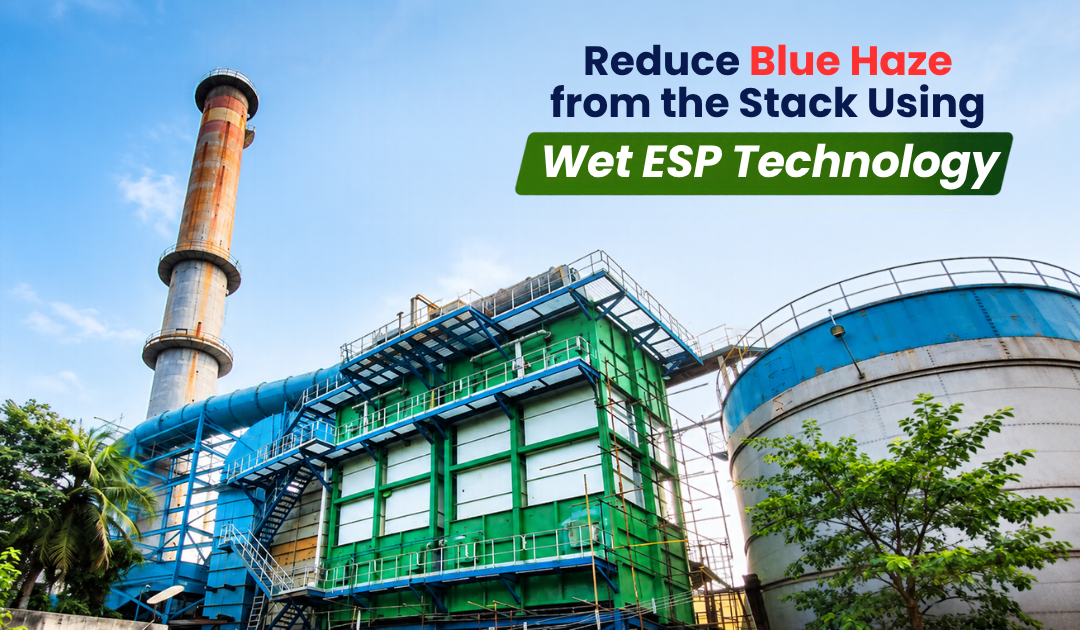
Reduce Blue Haze from the Stack Using Wet ESP Technology
Blue haze emerging from an industrial chimney can be a visible sign of fine particulate emissions, acid mist or other aerosol droplets escaping with exhaust gases. Although it may look like smoke, its appearance alone does not establish its chemical composition or source. In industries that process sulphur-containing materials, fine sulphuric acid droplets can contribute to a bluish or bluish-white plume. Controlling these emissions requires identifying the pollutants, understanding their formation and selecting suitable air pollution control equipment.
Wet Electrostatic Precipitator (Wet ESP) technology is used in industrial applications to capture fine liquid droplets, acid mists and submicron particulate matter from gas streams. Enviropol focuses on industrial air pollution control solutions, including technologies that help address fine mist and particulate emissions. Understanding how Wet ESP works can help industries assess whether it is appropriate for reducing visible haze and improving stack emission control.
Understanding Blue Haze from an Industrial Stack
A visible plume from a chimney can contain water vapour, condensed moisture, fine particles or liquid aerosol droplets. The colour and appearance may change with temperature, humidity, lighting and the composition of the exhaust gas. Blue haze is sometimes associated with very fine aerosols that scatter light differently from larger particles.
In sulphur-processing and combustion-related industries, sulphur trioxide (SO₃) can react with moisture in the flue gas to form sulphuric acid vapour. As the gas cools, this vapour may condense into extremely fine acid droplets. These droplets can remain suspended in the exhaust stream and pass through conventional particulate collection systems if the equipment is not designed to capture them.
It is therefore important to distinguish between ordinary water vapour and pollutant-containing aerosol emissions. Stack testing and process analysis help determine the actual source of the plume before selecting a control method.
Common White Plume from Chimney Causes
The white plume from chimney causes can vary between industrial processes. A visible plume should be investigated rather than assumed to have a single cause. Some common contributors include:
- Sulphuric acid mist: Fine acid droplets may form when SO₃ reacts with water vapour and the resulting acid vapour condenses.
- Sulphur trioxide emissions: SO₃ in flue gas can contribute to sulphuric acid aerosol formation, particularly under suitable cooling and moisture conditions.
- Fine particulate matter: Small particles released during combustion or manufacturing can contribute to visible haze.
- Condensed moisture: Changes in exhaust temperature and ambient conditions can produce visible water droplets, which may resemble an emission plume.
- Process-related aerosols: Certain chemical, metallurgical and manufacturing operations can generate fine liquid droplets that require specialised collection.
Identifying the pollutant is essential because different emission sources require different control strategies. A Wet ESP may be suitable when fine mist and aerosol droplets are the main concern, but it is not a universal solution for every visible stack plume.
What Is Wet ESP Technology?
A Wet Electrostatic Precipitator (Wet ESP or WESP) is an air pollution control device designed to remove fine particulate matter, liquid aerosols and acid mist from industrial exhaust gases. Unlike a conventional dry ESP, which generally collects particles on dry surfaces and removes them through mechanical cleaning, a Wet ESP uses water to charge and wash captured contaminants from its collection surfaces.
The technology uses a high-voltage electrical field to charge particles suspended in the gas stream. These charged particles are then attracted towards collection electrodes carrying the opposite charge. Once collected, they are washed away by water, preventing the contaminants from accumulating on the electrodes.
Wet ESP systems are particularly relevant for fine aerosols that may pass through conventional dust collection equipment. The US Environmental Protection Agency identifies wet ESPs as a technology used for particulate matter and acid mist control.
How Wet ESP Helps Reduce Blue Haze from the Stack
A Wet ESP can help reduce visible blue haze when the plume contains fine acid droplets or other collectable aerosols. Its operation involves several stages:
1. Gas enters the collection chamber
Industrial exhaust gas passes through the Wet ESP after suitable upstream gas conditioning treatment. Gas distribution arrangements help maintain an even flow through the collection section. Uniform distribution is important because uneven gas flow can affect collection performance.
2. Particles receive an electrical charge
High-voltage discharge electrodes create a corona discharge that generates ions. These ions transfer electrical charges to fine particles and liquid droplets suspended in the exhaust gas.
3. Charged particles move towards collection surfaces
The electrical field attracts the charged particles towards the collection electrodes. Fine acid mist droplets and other suspended particulate matter can then be captured on these surfaces.
4. Water washes the collected contaminants away
Water is supplied during intervals to the collection surfaces to remove accumulated material. The resulting wastewater must be collected and managed through an appropriate treatment or disposal arrangement.
5. Treated gas moves towards the stack
After passing through the collection section, the treated gas exits the equipment. Properly designed and operated Wet ESP systems can significantly reduce fine mist and particulate carryover, helping improve stack plume appearance.
The effectiveness of this process depends on particle size, gas velocity, electrical operating conditions, temperature, moisture content and equipment design.
Sulphuric Acid Mist and SO₃ Emissions in Industrial Exhaust
Sulphuric acid mist is a significant concern in industrial operations involving sulphur-bearing fuels, chemical processing and flue gas treatment. During combustion, a portion of sulphur dioxide (SO₂) can be oxidised to sulphur trioxide (SO₃). When SO₃ comes into contact with water vapour under suitable temperature conditions, it can form sulphuric acid vapour, which may subsequently condense into very fine droplets.
These droplets can be difficult to capture using conventional particulate control equipment because of their small size. In some installations, they can pass through wet scrubbers and mist eliminators, contributing to visible stack emissions.
This is where SO3 acid mist control industrial stack systems become important. A suitable control arrangement must consider the concentration of SO₃, acid mist loading, exhaust temperature, gas flow and the performance of existing pollution control equipment.
A Wet ESP installed downstream of suitable upstream treatment can capture fine acid mist that remains in the gas stream. However, its suitability must be assessed against the actual process conditions rather than assuming that every blue plume contains sulphuric acid.
Applications of Wet ESP Technology
Wet ESP systems are used in industrial applications where fine particulate matter, acid mist and liquid aerosols need additional control. Common application areas include:
- Thermal power plants: Wet ESP can be considered downstream of flue gas desulphurisation systems to control residual acid mist and fine particulate emissions.
- Sulphuric acid manufacturing: They can help collect acid mist generated during relevant production and gas treatment processes.
- Metal processing industries: Metallurgical operations may generate fine aerosols and particulate matter that require specialised collection.
- Petrochemical facilities: Certain process exhaust streams containing fine mist or condensable aerosols may require Wet ESP treatment.
- Chemical manufacturing: Selected chemical processes can generate acid mist and fine liquid droplets that need effective emission control.
- CO2 capture plants: Wet ESP is extensively used to clean the gas with any contamination before the gas is sent for CO2 capture.
- Captive Power Plants: Wet ESP or WESP is used to collect the SPM and gaseous pollutants from the flue gas generated by biomass fired boilers.
The correct configuration depends on the composition and characteristics of each exhaust stream.
Key Factors in Selecting a Wet ESP System
Selecting a Wet ESP requires an understanding of the industrial process and the pollutants present in the exhaust gas. Important considerations include:
- Gas flow rate: The equipment must be designed for the actual and expected exhaust volume.
- Particle size: Fine aerosol size distribution influences charging and collection performance.
- Acid mist concentration: Inlet pollutant loading helps determine the required collection capacity.
- Temperature and humidity: These affect gas conditions, condensation behaviour and system operation.
- Corrosion resistance: Materials must be suitable for the acidic and moisture-rich operating environment.
- Electrical operating conditions: Voltage, current and electrode arrangement influence particle charging and collection.
- Water management: Washing arrangements, wastewater collection and treatment must be considered during system design.
- Maintenance access: Electrodes, water distribution systems and electrical components need inspection and maintenance.
A complete assessment should also consider pressure drop, available installation space, operating costs and integration with existing pollution control equipment.
Importance of Proper Operation and Maintenance
Even a correctly selected Wet ESP requires regular inspection and performance monitoring. Poor water distribution can leave parts of the collection surface inadequately washed. Scaling, corrosion, blockages and electrical faults may also reduce system effectiveness.
Operators should monitor parameters such as voltage, current, gas flow, temperature, water circulation and pressure drop. Periodic inspection of discharge electrodes and collection surfaces helps identify deterioration or material deposits.
Wastewater generated during washing should be evaluated for its pollutant content and managed in accordance with applicable environmental requirements. Monitoring inlet and outlet emissions also helps determine whether the equipment is achieving the intended control performance.
It is important to note that Wet ESP operation requires careful optimisation. Research has identified conditions in which residual SO₂ and certain electrical operating conditions may contribute to additional ultrafine sulphuric acid aerosol formation inside the equipment. This makes process-specific design and operating control essential.
Enviropol's Approach to Industrial Stack Emission Control
Enviropol recognises the importance of selecting air pollution control equipment according to the characteristics of the industrial process. When a facility experiences visible stack haze, the first step is to understand the emission source through process information, gas analysis and appropriate stack monitoring.
For applications involving fine acid mist and aerosol emissions, Wet ESP technology can be evaluated as part of an integrated pollution control system. The assessment should consider existing scrubbers, particulate collectors, gas conditioning arrangements and the required emission performance.
A properly engineered wet electrostatic precipitator for acid mist can provide an additional collection stage for fine droplets that conventional equipment may not effectively capture. Its performance, however, depends on correct sizing, suitable materials, electrical design, water management and operating conditions.
Enviropol's focus on process-specific evaluation helps industries understand their emission control requirements and identify appropriate technological solutions. The objective is not simply to make a visible plume disappear, but to address the pollutants responsible for it through a suitable and measurable control approach.
Conclusion
Blue haze from an industrial stack can indicate the presence of fine aerosols, including sulphuric acid mist, although proper testing is necessary to establish its actual cause. When SO₃ reacts with moisture and forms fine acid droplets, conventional dust collection systems may not provide sufficient control.
Wet ESP technology offers a specialised approach by electrically charging suspended particles, collecting them on electrodes and washing them away with water. Its application can help industries reduce fine acid mist and particulate emissions when the process conditions and equipment design are suitable.
Enviropol emphasises the importance of understanding the emission source, evaluating existing treatment systems and selecting appropriate pollution control technology. Effective stack emission management depends on sound engineering, regular monitoring and consistent equipment maintenance.
Frequently Asked Questions
1. What causes blue haze from an industrial chimney?
Blue haze may result from fine particulate matter, condensed moisture or liquid aerosols such as sulphuric acid mist. In sulphur-containing processes, SO₃ can react with water vapour and form fine acid droplets. Stack testing is necessary to identify the actual cause.
2. How does a Wet ESP remove sulphuric acid mist?
A Wet ESP uses high-voltage electrodes to electrically charge fine acid droplets. The charged droplets move towards collection surfaces, where they are captured and washed away using water. This process helps reduce acid mist carried in industrial exhaust gases.
3. Why can conventional dust collectors fail to remove acid mist?
Some acid mist droplets are extremely small and may pass through conventional particulate collection equipment. Their collection depends on particle size and the operating characteristics of the equipment. Wet ESP technology is specifically used in applications requiring additional fine aerosol control.
4. What is the role of SO₃ in blue stack emissions?
Sulphur trioxide can combine with water vapour to form sulphuric acid vapour. As the gas cools, the acid may condense into fine droplets that remain suspended in the exhaust stream. These aerosols can contribute to visible bluish stack emissions.
5. Can a Wet ESP be installed after a wet scrubber?
Yes. Wet ESP systems are used downstream of certain wet flue gas desulphurisation systems to capture residual acid mist and fine particulate matter. The installation must be evaluated according to gas conditions, available space and the performance requirements of the facility.
6. What factors affect Wet ESP collection efficiency?
Collection efficiency depends on particle size, gas velocity, electrical field strength, temperature, moisture content, gas distribution and electrode condition. Water distribution and regular maintenance are also important for consistent operation.
7. Does a Wet ESP eliminate every type of visible stack plume?
Almost. A Wet ESP is designed to collect Water particles, SPM and aerosols, including acid mist, but it does not eliminate every possible cause of a visible plume. Identifying the plume composition is essential before selecting a solution.