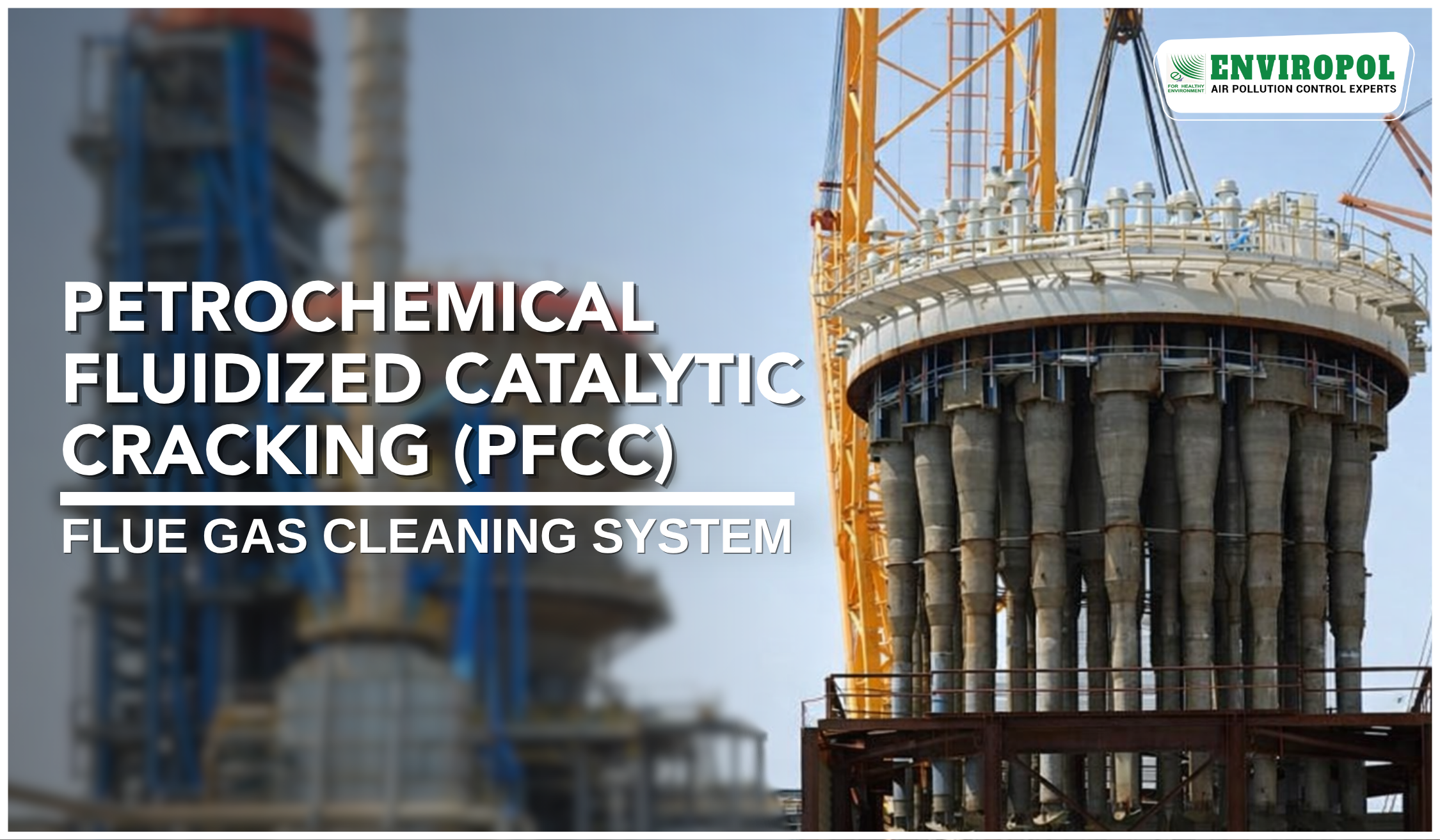
Petrochemical Fluidized Catalytic Cracking (PFCC) Flue Gas Cleaning System
Petrochemical Fluidized Catalytic Cracking (PFCC), commonly referred to as Fluidized Catalytic Cracking (FCC), is one of the most important conversion processes used in modern refineries. It plays a critical role in transforming heavy hydrocarbon fractions into lighter, more valuable products such as gasoline, diesel-range fuels, and olefins used in petrochemical production. However, alongside its efficiency and economic value, the FCC process generates a significant amount of flue gas containing harmful pollutants.
These emissions typically include particulate matter (catalyst fines), sulfur oxides (SOx), nitrogen oxides (NOx), carbon monoxide (CO), and trace heavy metals. Without proper treatment, these pollutants can have serious environmental and health impacts. To address these challenges, refineries deploy advanced PFCC flue gas cleaning systems that ensure emissions are controlled effectively while maintaining operational efficiency.
Understanding the Need for PFCC Flue Gas Cleaning Systems
The Fluidized Catalytic Cracking Unit (FCCU) operates at high temperatures and involves continuous catalyst circulation, making it a key process in modern refineries. During operation, coke deposits form on the catalyst, reducing its efficiency. To restore activity, the spent catalyst is sent to the regenerator, where the coke is burned off. This process generates large volumes of flue gas containing fine catalyst particles along with harmful pollutants such as SOx, NOx, and carbon monoxide. If not properly treated, these emissions can negatively impact both the environment and human health, making flue gas cleaning essential before release.
With increasingly strict environmental regulations worldwide, refineries are required to control and reduce emissions significantly. Regulatory bodies impose tight limits on pollutants like SOx, NOx, and particulate matter, pushing industries to adopt effective emission control systems. Failure to comply can lead to penalties and operational challenges. As a result, flue gas cleaning systems have become a critical part of refinery operations, helping industries meet environmental standards while maintaining safe and efficient processes.
A well-designed PFCC flue gas cleaning system not only ensures regulatory compliance but also improves overall operational reliability. By removing particulates and harmful gases, it helps protect equipment, reduce maintenance needs, and enhance system efficiency. Additionally, it supports sustainable operations by lowering environmental impact, making it an essential component in modern refining infrastructure.
Key Components of a PFCC Flue Gas Cleaning System
A typical petrochemical flue gas cleaning system consists of multiple stages, each targeting specific pollutants. These components work in a coordinated manner to achieve comprehensive emission control.
1. Cyclone Separators
Cyclone separators are the first line of defense in flue gas treatment. Installed within the FCC regenerator, they remove large catalyst particles from the flue gas stream using centrifugal force. This prevents excessive particulate load from reaching downstream equipment and improves overall system efficiency.
2. Electrostatic Precipitators (ESP)
Electrostatic precipitators are highly effective in capturing fine particulate matter that escapes cyclone separators. They use electrically charged plates to attract and collect particles, ensuring that even micron-sized catalyst fines are removed. ESPs are widely used due to their high efficiency and ability to handle large gas volumes.
3. Wet Gas Scrubbers
Wet gas scrubbers play a crucial role in reducing sulfur oxide emissions. In this stage, flue gas comes into contact with a scrubbing liquid—typically an alkaline solution—that absorbs and neutralizes acidic gases like SO₂. These systems are particularly effective in meeting stringent sulfur emission standards.
4. Selective Catalytic Reduction (SCR)
SCR systems are used to control nitrogen oxide emissions. In this process, ammonia or urea is injected into the flue gas stream, which reacts with NOx in the presence of a catalyst to form nitrogen and water vapor. This technology is highly efficient and widely adopted in modern refineries.
Each of these components contributes to effective fluidized catalytic cracking flue gas treatment, ensuring cleaner emissions and safer operations.
How FCCU Flue Gas Scrubbing Systems Work?
An FCCU flue gas scrubbing system primarily targets sulfur compounds, which are among the most significant pollutants generated during the FCC process. These sulfur oxides (SOx) are formed when sulfur present in the feedstock is oxidized during catalyst regeneration. If released untreated, they can contribute to acid rain, air pollution, and serious health concerns. To address this, the scrubbing system is designed to effectively capture and neutralize these emissions before they are discharged into the atmosphere.
The scrubbing process typically involves passing the flue gas through a contactor or absorber unit, where it comes into close contact with an alkaline scrubbing solution, often containing compounds like sodium or calcium-based reagents. This interaction allows for efficient mass transfer between the gas and liquid phases, ensuring maximum removal of pollutants. The design of the contactor plays a crucial role in enhancing the contact efficiency and overall performance of the system.
During this process, sulfur oxides react chemically with the alkaline medium, resulting in the formation of less harmful compounds such as sulfates or sulfites. These by-products are then collected in the liquid phase and can be safely removed, treated, or even reused in certain applications depending on the system design. This not only helps in reducing harmful emissions but also supports environmentally responsible waste management practices.
Modern scrubbing systems are designed with advanced features such as:
• High-efficiency spray nozzles for better gas-liquid contact
• Multi-stage scrubbing for enhanced removal efficiency
• Low-pressure drop designs to reduce energy consumption
• Closed-loop water systems to minimize water usage
These innovations ensure that FCCU scrubbing systems are not only effective but also environmentally sustainable.
Benefits of Petrochemical Air Pollution Control Systems
Implementing a petrochemical air pollution control system offers numerous advantages that extend beyond regulatory compliance.
1. Regulatory Compliance
Strict environmental norms require refineries to limit emissions of harmful pollutants. Flue gas cleaning systems help industries meet these standards and avoid penalties.
2. Environmental Protection
By reducing emissions of SOx, NOx, and particulate matter, these systems play a vital role in minimizing air pollution and protecting ecosystems.
3. Improved Operational Efficiency
Cleaner flue gas reduces fouling and corrosion in downstream equipment, leading to lower maintenance costs and improved process reliability.
4. Enhanced Workplace Safety
Reducing exposure to toxic gases improves safety conditions for plant personnel and surrounding communities.
5. Sustainability and Corporate Responsibility
Adopting advanced emission control technologies demonstrates a commitment to sustainable industrial practices and environmental stewardship.
Challenges in Flue Gas Treatment
Despite the advantages, implementing PFCC flue gas cleaning systems comes with certain challenges:
1. High Capital Investment: Advanced systems such as ESPs and SCR units require significant initial investment.
2. Operational Complexity: Managing multiple systems simultaneously requires skilled personnel and advanced monitoring tools.
3. Maintenance Requirements: Regular maintenance is essential to ensure consistent performance and avoid downtime.
4. Handling By-products: Proper disposal or treatment of collected pollutants and residues is necessary to prevent secondary pollution.
Addressing these challenges requires a combination of technological innovation, proper system design, and effective operational strategies.
Emerging Trends in Flue Gas Cleaning Technologies
The field of fluidized catalytic cracking flue gas treatment is evolving rapidly, driven by stricter regulations and the need for sustainable solutions.
1. Hybrid Systems
Modern refineries are adopting hybrid systems that combine ESPs, scrubbers, and DeNOx technologies to achieve higher efficiency and flexibility.
2. Digital Monitoring and Automation
Advanced sensors and real-time monitoring systems are being integrated into flue gas cleaning units. These technologies enable predictive maintenance, optimize performance, and reduce operational costs.
3. Energy-Efficient Designs
New systems are designed to minimize energy consumption while maintaining high removal efficiency. This helps reduce the overall carbon footprint of refinery operations.
4. Water Conservation Technologies
Innovations in scrubber design are reducing water usage through recycling and closed-loop systems, addressing growing concerns about water scarcity.
5. Carbon Capture Integration
Some advanced systems are being designed to integrate with carbon capture technologies, paving the way for lower greenhouse gas emissions in the future.
Role of PFCC Systems in Sustainable Refining
As the global energy landscape continues to shift toward cleaner and more sustainable practices, refineries are facing increasing pressure to minimize their environmental impact while maintaining operational efficiency. Governments, environmental agencies, and communities are demanding stricter emission controls and greater accountability from industrial operations. In this evolving scenario, PFCC flue gas cleaning systems play a vital role in helping refineries meet these expectations.
By effectively controlling emissions, these systems help refineries:
• Align with international environmental standards
• Reduce their carbon footprint
• Improve public perception and stakeholder trust
• Contribute to global sustainability goals
The integration of advanced emission control technologies is no longer optional—it is a strategic necessity for long-term viability.
Conclusion
PFCC flue gas cleaning systems are indispensable in modern petrochemical operations. They ensure that the benefits of fluidized catalytic cracking are not overshadowed by environmental concerns. By combining technologies such as cyclone separators, electrostatic precipitators, wet scrubbers, and SCR systems, refineries can achieve comprehensive emission control.
As environmental regulations become more stringent and sustainability takes center stage, the demand for advanced flue gas treatment solutions will continue to grow. Innovations in efficiency, automation, and resource conservation will further enhance the effectiveness of these systems.
Enviropol focuses on delivering advanced, efficient, and reliable solutions that align with continuously evolving environmental standards and industry requirements. With a strong emphasis on innovation and performance, the company designs systems that help industries effectively manage emissions while maintaining operational efficiency. Its solutions are tailored to meet the specific needs of petrochemical and refining processes, ensuring both compliance and long-term reliability.