International Carbon Registry (ICR): Building Trust and Transparency in Global Carbon Markets
As governments and industries work toward reducing greenhouse gas emissions, carbon markets have become an important tool for supporting climate action. However, the effectiveness of these markets depends on transparency, accountability, and the credibility of carbon credits. This is where the international carbon registry plays a significant role. It provides a structured framework for registering climate projects, issuing carbon credits, and maintaining transparent records of carbon transactions. Organizations involved in carbon reduction initiatives rely on such registries to ensure that their projects meet internationally recognized standards and contribute meaningfully to global sustainability goals.
At Enviropol, we closely follow developments in carbon markets and environmental compliance, helping industries understand emerging frameworks that support long-term sustainability.
What is the International Carbon Registry (ICR)?
The International Carbon Registry (ICR) is a globally recognized greenhouse gas (GHG) program and carbon registry platform that enables climate projects to register, issue, transfer, and retire high-integrity carbon credits in a transparent and secure manner. The registry operates in accordance with internationally recognized ISO standards and provides a robust digital infrastructure for managing carbon credits throughout their entire lifecycle.
Designed to support the voluntary carbon market, the ICR emphasizes environmental integrity, transparency, traceability, and accountability at every stage of the carbon credit process. By offering standardized methodologies, independent verification, and reliable project registration, the International Carbon Registry helps organizations, project developers, and investors demonstrate measurable contributions toward greenhouse gas emission reduction, climate mitigation, and global sustainability goals while strengthening confidence in voluntary carbon markets.
How the International Carbon Registry Works
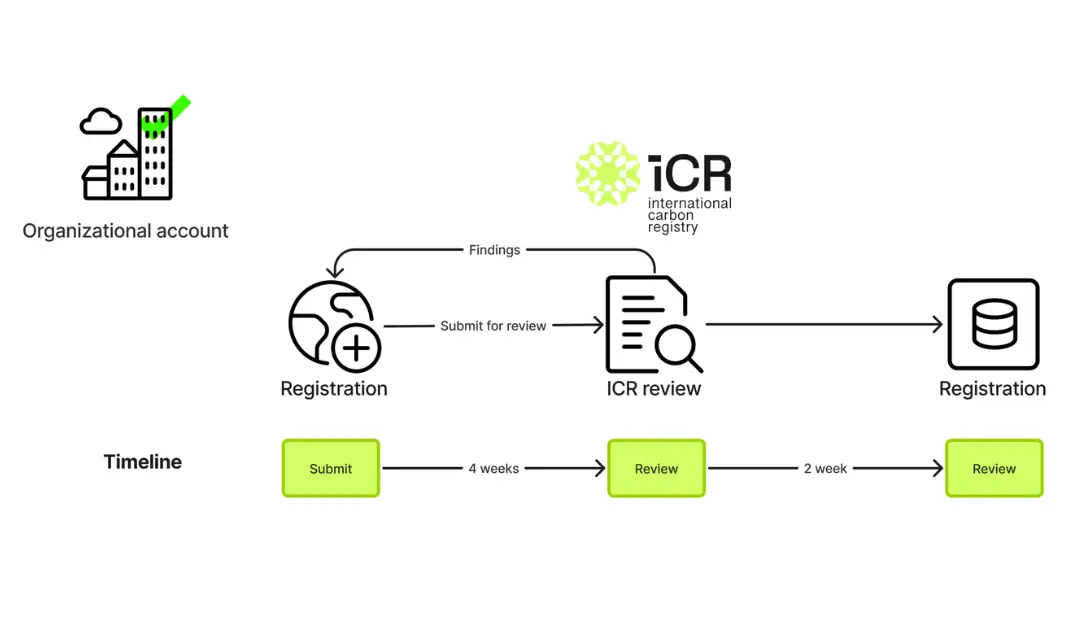
The International Carbon Registry (ICR) follows a structured and transparent process that begins with project registration. Climate projects such as renewable energy installations, energy efficiency initiatives, carbon capture technologies, waste management systems, forestry programs, and nature-based climate solutions must first demonstrate compliance with the registry's established standards and eligibility requirements. Before any carbon credits are issued, independent validation and verification bodies conduct detailed assessments to confirm that the projects genuinely reduce or remove greenhouse gas emissions and meet internationally recognized quality criteria.
Once a project has been successfully verified, the corresponding carbon credits are issued and securely registered within the digital platform. These credits can then be transferred, traded, or permanently retired through a transparent and well-documented registry system. Every transaction is accurately recorded and publicly traceable, ensuring complete transparency while minimizing the risks of double counting, duplicate issuance, or fraudulent claims. This robust verification and tracking process strengthens confidence among project developers, investors, regulatory authorities, and carbon credit buyers, ultimately supporting the integrity and credibility of global voluntary carbon markets.
Why the International Carbon Registry is Important
One of the primary objectives of the international carbon registry is to strengthen trust and credibility in voluntary carbon markets. Carbon credits only create real environmental and financial value when buyers have confidence that each credit represents a genuine, measurable, permanent, and independently verified reduction or removal of greenhouse gas emissions. Without reliable verification systems, the effectiveness of carbon offset programs can be questioned, reducing confidence among businesses, investors, and policymakers.
The registry promotes transparency by maintaining publicly accessible records of registered projects, issued carbon credits, ownership details, and retirement status. It also supports accountability by ensuring that projects follow internationally recognized methodologies, undergo rigorous third-party validation and verification, and comply with established quality standards. These safeguards help prevent fraud, eliminate double counting, improve market confidence, and encourage broader participation in climate action initiatives, enabling industries and organizations to invest in credible carbon reduction and sustainability efforts.
Standards and Methodologies Used by ICR
The credibility and effectiveness of any carbon registry largely depend on the quality, transparency, and scientific accuracy of its methodologies. The International Carbon Registry (ICR) relies on internationally recognized ISO 14064 standards while implementing approved methodologies for measuring, monitoring, validating, and reporting greenhouse gas (GHG) emission reductions and removals. These globally accepted standards ensure that every carbon project follows a consistent and transparent framework throughout its lifecycle.
These methodologies provide standardized procedures for a wide range of project categories, including renewable energy, industrial emission reduction, energy efficiency, waste management, forestry and afforestation, sustainable transportation, agriculture, and carbon removal initiatives. By following clearly defined protocols, project developers can accurately quantify emission reductions while maintaining consistency across different sectors and geographic regions. Independent third-party verification further confirms that reported emission reductions are genuine, measurable, additional, and permanent before carbon credits are issued. This rigorous scientific approach strengthens the integrity and credibility of voluntary carbon markets, builds confidence among investors and stakeholders, and promotes reliable environmental outcomes that contribute meaningfully to global climate change mitigation efforts.
Benefits of the International Carbon Registry
The international carbon registry offers several significant advantages for project developers, businesses, investors, governments, and organizations participating in voluntary carbon markets. It enhances transparency by maintaining secure and traceable digital records for every registered project and each carbon credit issued throughout its lifecycle. Independent validation and third-party verification increase confidence in environmental claims, while standardized methodologies ensure consistency, credibility, and comparability across different types of carbon reduction and removal projects.
The registry also simplifies carbon credit management by providing an integrated platform for project registration, credit issuance, ownership transfer, trading, retirement, and ongoing monitoring. This centralized system reduces the risk of double counting, improves accountability, and strengthens market integrity. By promoting transparency, efficiency, and trust, the international carbon registry supports the growth of high-quality climate projects and helps create a more reliable and sustainable global carbon marketplace.
Industries That Benefit from the International Carbon Registry
The International Carbon Registry supports a broad range of industries implementing greenhouse gas reduction projects. Renewable energy developers register solar, wind, hydroelectric, and biomass projects, while manufacturing industries use carbon reduction initiatives to improve environmental performance. Waste management companies, transportation providers, construction firms, forestry organizations, and carbon capture projects also benefit from standardized registration and verification procedures.
As more industries pursue sustainability goals, participation in credible carbon registries helps demonstrate measurable climate action while supporting responsible environmental management. Enviropol recognizes the growing importance of these frameworks for industries seeking reliable environmental compliance solutions and long-term sustainability planning.
The Role of International Carbon Registry in Carbon Markets
Carbon markets depend on trust, transparency, and robust accounting systems to ensure that every carbon credit represents a genuine and measurable reduction or removal of greenhouse gas emissions. The international carbon registry plays a central role in strengthening these markets by establishing standardized procedures for project registration, independent third-party verification, carbon credit issuance, ownership tracking, and secure transaction recording. These processes help maintain the integrity and credibility of carbon trading across global markets.
By maintaining transparent and publicly accessible records throughout the entire lifecycle of every carbon credit, the registry minimizes the risk of double counting, fraud, and inconsistencies. This increases confidence among buyers, investors, and project developers while encouraging greater investment in high-quality climate mitigation initiatives. Ultimately, a well-managed international carbon registry supports the broader objective of accelerating global decarbonization, promoting sustainable development, and helping countries and organizations achieve their climate commitments under internationally recognized environmental frameworks and agreements.
How Enviropol Supports Sustainable Industrial Solutions
Industries seeking to reduce emissions require more than regulatory compliance—they need practical engineering solutions that deliver measurable environmental benefits. Enviropol provides advanced air pollution control technologies that help industries reduce emissions, improve operational efficiency, and support sustainability objectives. By implementing effective emission control systems, industries can strengthen their environmental performance while aligning with evolving carbon management practices and international climate initiatives.
With extensive experience in industrial emission control, Enviropol continues to support organizations in achieving cleaner production processes and contributing to responsible environmental stewardship.
Conclusion
The international carbon registry has become an essential component of today's voluntary carbon markets by providing a transparent, standardized, and reliable platform for climate project registration and carbon credit management. Through internationally recognized methodologies, independent verification, and secure digital infrastructure, it strengthens confidence in carbon markets while supporting meaningful climate action.
As industries continue to prioritize sustainability and carbon reduction, understanding frameworks such as the International Carbon Registry becomes increasingly important. Alongside these evolving global initiatives, Enviropol remains committed to helping industries adopt effective environmental technologies that reduce emissions, improve compliance, and contribute to a cleaner, more sustainable future.
FAQs
1. What is the International Carbon Registry (ICR)?
The International Carbon Registry (ICR) is a global carbon credit registry that certifies, registers, and tracks verified greenhouse gas reduction and removal projects within voluntary carbon markets.
2. What is the role of the International Carbon Registry in carbon markets?
ICR supports voluntary carbon markets by registering verified carbon projects, issuing carbon credits, maintaining transparent records, and ensuring environmental integrity through internationally recognized standards and procedures.
3. How does ICR verify carbon credit projects?
ICR requires independent third-party validation and verification of projects, ensuring emission reductions are measurable, additional, permanent, and monitored according to approved international methodologies and standards.
4. Which types of projects are registered under ICR?
ICR registers renewable energy, energy efficiency, afforestation, reforestation, waste management, methane capture, carbon removal, and other projects that achieve verified greenhouse gas emission reductions.
5. What are the benefits of registering projects with ICR?
Registering projects with ICR enhances credibility, transparency, international recognition, investor confidence, and market access while supporting verified carbon credit issuance and sustainable climate initiatives globally.
6. How does ICR ensure transparency in carbon credits?
ICR maintains a publicly accessible registry that tracks project information, credit issuance, transfers, and retirements, ensuring transparency, preventing double counting, and strengthening market confidence.
7. Can businesses buy carbon credits through ICR-registered projects?
Yes, businesses can purchase carbon credits generated by ICR-registered projects to voluntarily offset unavoidable greenhouse gas emissions while supporting verified environmental and sustainability initiatives worldwide.
8. Why is ICR important for voluntary carbon markets?
ICR strengthens voluntary carbon markets by providing reliable standards, transparent project registration, independent verification, and trustworthy carbon credit issuance that supports credible global climate action and sustainability.