Flue Gas Treatment for Carbon Capture
Carbon capture technology has become one of the most promising solutions for managing industrial carbon dioxide (CO₂) emissions, as industries worldwide compete to meet sustainability targets. But it is not possible to achieve an efficient system without proper flue gas treatment. Industrial exhaust gases contain various contaminants, including particulate matter, sulfur oxides (SOx), nitrogen oxides (NOx), heavy metals, aerosols, acid mist and other pollutants that can disrupt carbon capture applications or cause equipment degradation.
Flue gas treatment is essential for effective carbon capture as it removes pollutants and optimises flue gas for CO₂ separation. The power generation, cement, steel production, refinery, and chemical processing industries are increasingly looking to integrated flue gas treatment and carbon capture systems to comply with environmental regulations and contribute to global climate goals.
What is Flue Gas Treatment?
Flue gas treatment is the process of cleaning industrial exhaust gases before they are released into the atmosphere or further treated. In combustion and production processes, industries emit flue gas composed of carbon dioxide, dust particles, sulfur compounds, nitrogen compounds, moisture and trace pollutants.
The main aim of flue gas treatment is to remove contaminants and reduce pollutants. This treatment not only meets environmental protection requirements for industries but also provides an appropriate environment for downstream carbon capture technologies. If flue gas cleaning is ineffective, carbon capture systems can be adversely affected by reduced efficiency, increased maintenance needs, and shorter lifetimes.
Why Carbon Capture Matters in Modern Industry
CO2 emissions are a key driver of global climate change. Renewable energy solutions are growing, but many industrial processes rely on combustion, which emits high levels of CO₂.
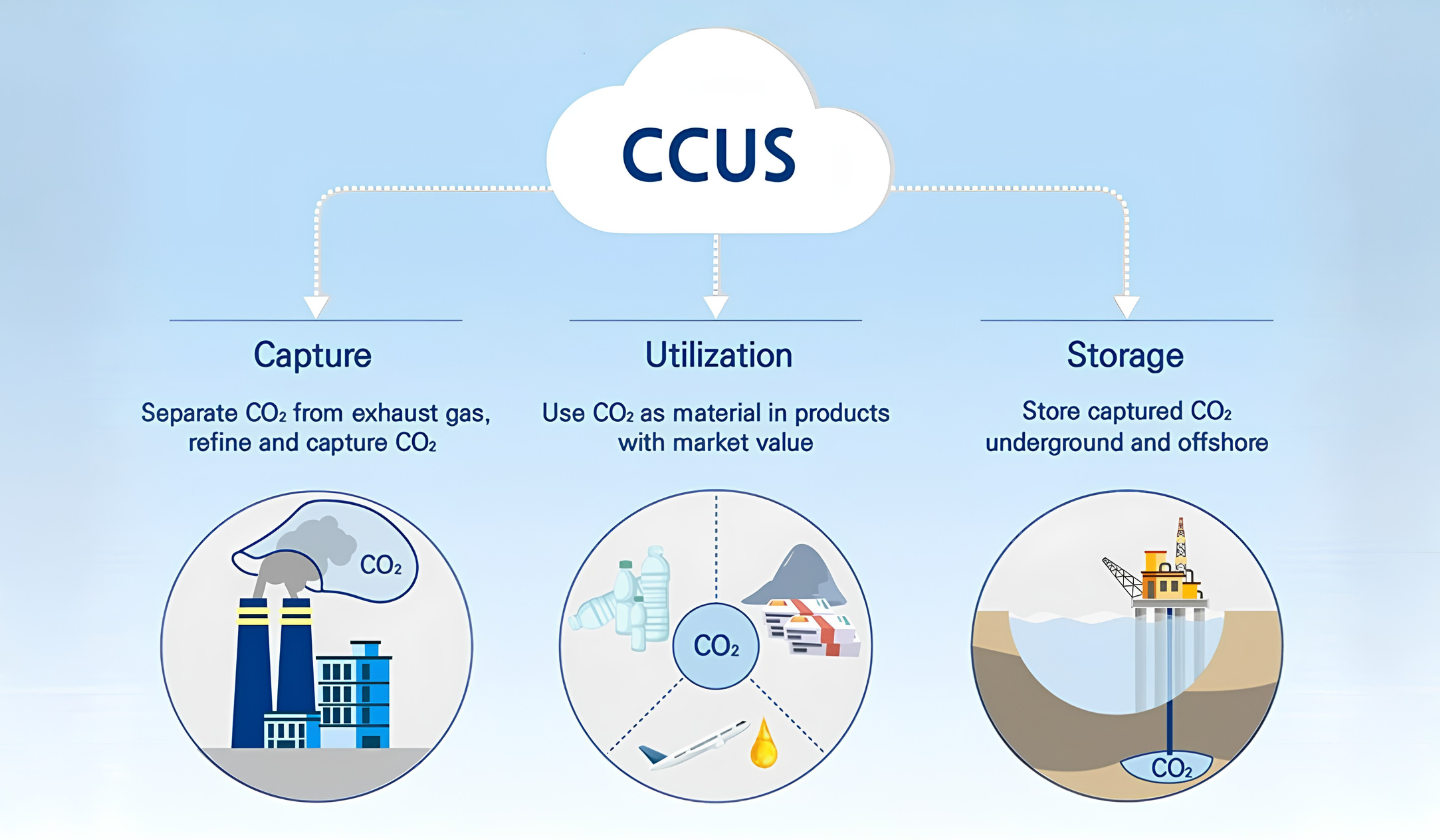
Carbon capture technology is used to remove carbon dioxide from flue gas before it is released into the atmosphere. The captured carbon can then be transported to a storage site or used in industrial processes. This allows industries to run and minimise their environmental footprint.
Effective carbon capture technology is key to reaching Net Zero emissions goals, enhancing environmental outcomes, and complying with increasingly stringent regulatory standards.
Understanding the Composition of Flue Gas
The flue gas from industrial processes is a complex stream of gases and pollutants. The knowledge of its composition is vital to designing an effective carbon-capturing system.
The main carbon dioxide targeted for capture is carbon dioxide. In addition, however, flue gas contains SO2, NOx, PM,aerosols, acid mist, water vapour, and trace contaminants. If they are not removed first, they may interfere with carbon capture technologies.
Particulate matter may cause equipment to clog and reduce operational efficiency. Sulfur dioxide can react with the capture solvents, leading to degradation and increased operating costs. Nitrogen oxides can cause corrosion and negatively impact overall process performance. Thus, for effective carbon dioxide separation, it is essential to treat the flue gas thoroughly beforehand.
The Connection Between Flue Gas Treatment and Carbon Capture
The cleaner and purer the incoming gas stream, the better the carbon capture systems will operate. Flue gas treatment serves as a pre-conditioning step to eliminate pollutants and render the gas suitable for carbon capture processes.
If contaminants remain in the flue gas, the equipment will be damaged, solvent efficiency will decrease, equipment downtime will increase, and carbon capture will be reduced. The integration of the latest flue gas treatment technologies allows industries to capture as much carbon as possible, prolong the life of their equipment and minimise the risk of operating their plants.
The quality of the flue gas entering the carbon capture unit is key to the success of any carbon capture project.
Key Technologies Used in Flue Gas Treatment
In industrial exhaust streams, several technologies are employed to clean them before carbon capture. Each technology removes specific pollutants, and each will contribute to the overall emission-control performance.
Dust and fine particles are removed from the exhaust stream by particulate removal systems such as Wet Electrostatic Precipitator (WESP), baghouse filters, dust collectors and electrostatic precipitators. These systems can prevent equipment fouling and ensure efficient gas flow.
Flue Gas Desulfurization (FGD) systems are commonly employed to reduce SO₂ emissions from industrial processes. Various scrubbers can effectively lower SO₂ concentrations, safeguarding downstream carbon capture equipment and complying with environmental regulations; wet, dry, and semi-dry scrubbers are all effective.
Wet Electrostatic Precipitator (WESP) is used to capture ultra fine particulate matter as well as aerosols and acid mist from the gas before the clean gas is further processed for carbon capture.
Technologies used to reduce NOx emissions, such as Selective Catalytic Reduction (SCR) and Selective Non-Catalytic Reduction (SNCR), can help manage NOx emissions and further enhance gas quality before carbon capture.
Carbon Capture Technologies Used in Industry
There are several carbon capture technologies in use in various sectors, including post-combustion capture.
Post-combustion carbon dioxide capture systems remove carbon dioxide from the treated flue gas after combustion. Solvent-based technologies are also common and are especially applicable in existing facilities with relatively few changes.
Pre-combustion capture is a method for capturing carbon before fuel combustion. This is a technique frequently used in gasification-based plants and integrated gasification combined-cycle plants.
Another method of combustion is called “oxy-fuel” combustion, which involves burning the fuel in pure oxygen rather than air. This results in a very concentrated CO2 stream, which makes the capture process easier.
When combined with effective flue gas treatment and conditioning, each carbon capture technology benefits greatly.
Carbon Capture Applications in Power Plants
Power plants remain one of the largest sources of CO2 emissions worldwide. Large amounts of flue gas are produced by coal- and natural gas-fired facilities and will need to be treated before coal capture can be achieved.
Modern power plants are increasingly integrating Wet Electrostatic Precipitator (WESP), electrostatic precipitators (ESPs), flue gas desulfurization (FGD), and carbon capture equipment to provide comprehensive emission control. This holistic solution can help to lower the amount of traditional air pollutants and GHGs emitted by the operator.
With an increasing number of environmental regulations being implemented by governments, carbon capture is an indispensable aspect of future generation strategies.
Carbon Capture in Cement, Steel, and Heavy Industries
Industries like cement production, steel making and chemical processing are called "hard-to-abate sectors" because their emissions cannot be completely reduced by using renewable energy.
Industries release carbon dioxide from burning fuel and during production. One of the most attractive routes towards cutting emissions in these areas is carbon capture.
Preventing contamination before capture using advanced flue gas treatment systems ensures an efficient process with minimal environmental impact for industries. With the growing demand for sustainability, carbon capture will play an increasing role in heavy industrial processes.
Environmental Benefits of Flue Gas Treatment and Carbon Capture
The treatment of flue gases, combined with carbon capture, brings significant environmental benefits. Industries can drastically decrease their carbon dioxide emissions and air pollution by removing pollutants and capturing carbon dioxide.
Carbon capture reduces the release of high amounts of greenhouse gases into the atmosphere. At the same time, flue gas treatment technologies minimise emissions of particulate matter, SO2, and NOx, aerosols, acid mist thereby improving air quality and health in the local area.
These environmental enhancements are in addition to the overall sustainability aims and in line with national and international legislation.
Challenges Facing Carbon Capture Projects
While carbon capture has tremendous potential, obstacles must be overcome for it to be widely adopted. High capital costs remain a major challenge, given the sophisticated equipment and infrastructure required for flue gas treatment and carbon capture systems.
Another factor to consider is energy use. The solvent regeneration, gas compression, and system operation are typically energy-intensive steps in carbon capture processes. The handling of solvents and the maintenance of equipment are other cost factors.
However, new technologies are still emerging to make carbon capture more efficient and less costly to implement, making a wider range of industrial applications more attractive.
Future Trends in Flue Gas Treatment and Carbon Capture
The development of technologies for flue gas capture and treatment is closely tied to the future of industrial emissions control. New solvents are being developed that are less energy-intensive and offer higher capture efficiencies.
The integration of AI and digital monitoring systems into emission control systems is enhancing operational effectiveness and predictive maintenance. The advanced sensors and real-time analytics enable facilities to optimise performance and minimise downtime.
There is also growing interest in carbon utilisation technologies. Rather than just storing captured CO₂, industries are now discovering innovative uses for CO₂ in construction, chemicals, synthetic fuels, and other commercial products.
The progress is likely to gain momentum as industries become more net-zero.
Enviropol's Expertise in Flue Gas Treatment Solutions
Enviropol offers pioneering air pollution control and flue gas treatment solutions to help achieve modern industry sustainability goals. The Company's speciality is dust collection systems, electrostatic precipitators, wet and dry scrubbers, flue gas desulfurization systems and integrated emission control technologies.
Enviropol's customised solutions are designed to meet industry-specific needs, enabling organisations to optimise environmental performance, comply with regulations, and be ready for future carbon capture implementation. The company's experience in pollution control technologies allows industries to run more efficiently, minimising environmental impact.
Conclusion
Carbon capture is quickly emerging as a key technology for reducing industrial GHG emissions and advancing global climate goals. But flue gas treatment is a very critical aspect for successful carbon capture. It is important to remove particulate matter, sulfur oxides, nitrogen oxides, and other contaminants to achieve maximum capture and prevent damage to downstream equipment.
The industries will increasingly rely on integrated flue gas treatment and carbon capture systems to control their emissions as they strive for sustainability and environmental compliance. As Enviropol continues to innovate and advance pollution control technologies, it will continue to assist industries in operating cleaner, safer, and more sustainably in the years to come with custom-engineered solutions.